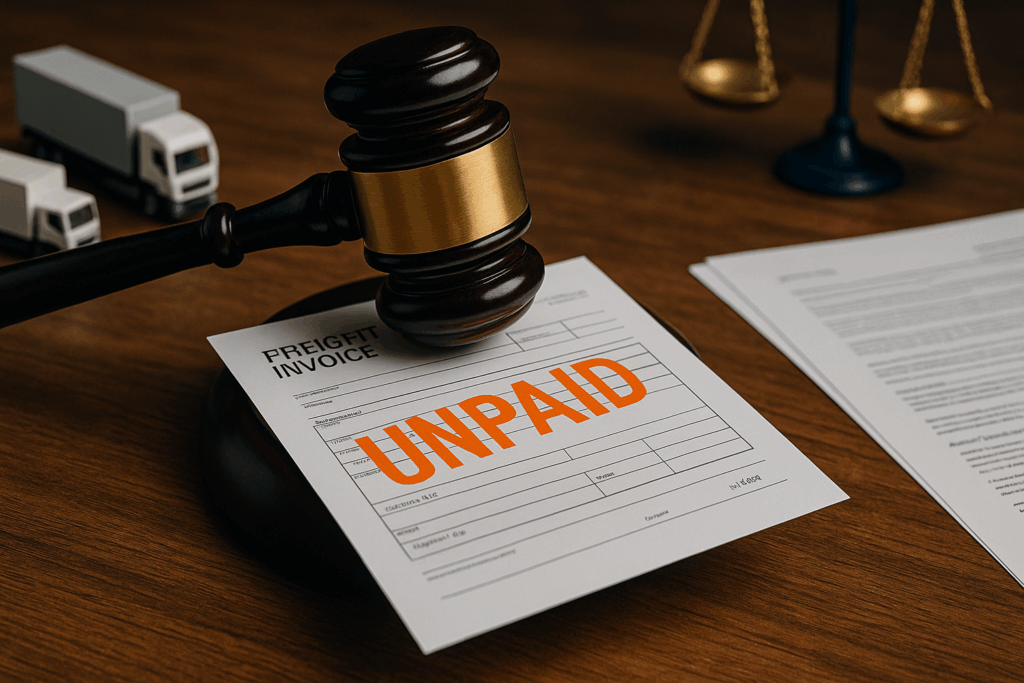
What Happens When a Freight Contract Is Breached? Your Legal Options Explained
When a freight contract breach occurs, the consequences can be costly, frustrating, and legally complex. Late payments, missed pickups, and broken terms can disrupt your entire logistics operation — especially if you’re a carrier, broker, or shipper relying on tight delivery windows and payment cycles. That’s where freight contract enforcement comes into play.
Understanding your legal rights and the steps available to enforce your agreement is critical for protecting your business and getting paid what you’re owed.
Common Types of Freight Contract Breaches
Freight contract enforcement begins with identifying what type of breach occurred. Not every issue is the same, but some violations come up more often than others in the shipping industry.
Late Payment or Non-Payment by the Shipper or Broker
This is the most common reason clients pursue freight contract enforcement. Whether a broker refuses to pay after the load is delivered or a shipper goes silent, failing to honor payment terms constitutes a breach.
Failure to Provide Scheduled Loads
In some cases, a broker or shipper will agree to a volume or specific lanes — and then back out. If the contract was clear and the commitment was binding, that’s enforceable.
Unauthorized Reconsignment or Detention
If the shipper changes the delivery terms mid-route or causes unreasonable delays without compensation, these can also qualify as contract breaches.
Legal Remedies Under Freight Contract Enforcement
When a freight contract breach occurs, the law provides several remedies. The right solution depends on the nature of the breach and the clarity of the agreement itself.
Damages for Losses Incurred
If your business suffered financially because of a breach, you may be entitled to compensatory damages. These can include unpaid invoices, lost revenue, and even reputational harm in some cases.
Specific Performance or Contract Completion
Although less common in freight, a court may order the breaching party to fulfill their contract obligations. This remedy is more typical in cases where financial damages alone aren’t adequate.
Termination & Legal Action
In severe cases, freight contract enforcement can mean ending the agreement altogether and filing a lawsuit for breach of contract. With a strong legal strategy, you may also recover attorney’s fees if your contract includes a fee-shifting provision.
How to Prove a Freight Contract Breach
Before you can enforce the agreement, you must prove the breach occurred. This means documenting exactly what went wrong and showing that the other party failed to meet their obligations.
Key evidence includes:
- The signed freight contract or broker-carrier agreement
- Rate confirmations or load tenders
- Email or written correspondence
- Proof of delivery (PODs), BOLs, or delivery receipts
- Payment history or non-payment records
Freight contracts are often governed by both state and federal law. Having clear, written documentation that supports your claim is essential for freight contract enforcement.
When to Involve a Trucking Contract Lawyer
While some disputes can be resolved directly with the other party, many escalate into costly and time-consuming legal battles. This is where working with a trucking contract lawyer becomes crucial.
A qualified attorney can:
- Review your contract for enforceability
- Draft a strong demand letter backed by legal precedent
- Initiate mediation or arbitration
- File a breach of contract lawsuit in the appropriate jurisdiction
- Negotiate a settlement or represent you in court
Early legal intervention not only increases your chances of recovery, but also helps preserve critical evidence.
What If There Was No Written Contract?
Even if your agreement was verbal or based on a load board confirmation, there may still be legal grounds for enforcement. Courts can sometimes enforce unwritten freight agreements under implied contract or course of dealing doctrines — but this route is harder to prove and riskier.
It’s always better to operate under clear, written contracts that spell out payment terms, dispute resolution procedures, and governing law clauses.
Realistic Scenario: A Freight Broker Defaults After Delivery
Let’s say you’re a trucking company based in Texas. You deliver three loads for a broker who promised payment within 30 days. Sixty days pass — no payment. Your emails go unanswered. The broker’s MC number is still active, but now you hear other carriers have had similar issues.
This is a textbook case for freight contract enforcement. Your options might include:
- Sending a demand letter for payment
- Filing a complaint with the FMCSA
- Hiring a lawyer to initiate a breach of contract lawsuit
- Seeking recovery via a freight broker’s surety bond (if applicable)
The key is acting quickly and using the right legal channels.
Conclusion: Protect Your Freight Business Through Legal Enforcement
A freight contract breach can upend your cash flow and compromise future business relationships. But with the right legal help, you don’t have to accept losses or missed payments. Whether you’re facing a broker dispute, shipper default, or carrier non-performance, strong freight contract enforcement strategies can protect your rights and recover what you’re owed.
Don’t wait until it’s too late. If you’re dealing with a broken freight agreement, speak with a lawyer who understands the logistics industry and contract law.
Contact Us Today for Immediate Assistance
If you’re facing unpaid freight invoices and need help getting paid, Freight Collection Solutions Law Group is here for you. Let us handle the legal details while you focus on your business.
For immediate assistance, contact us at 713-940-1886 or fill out the form.