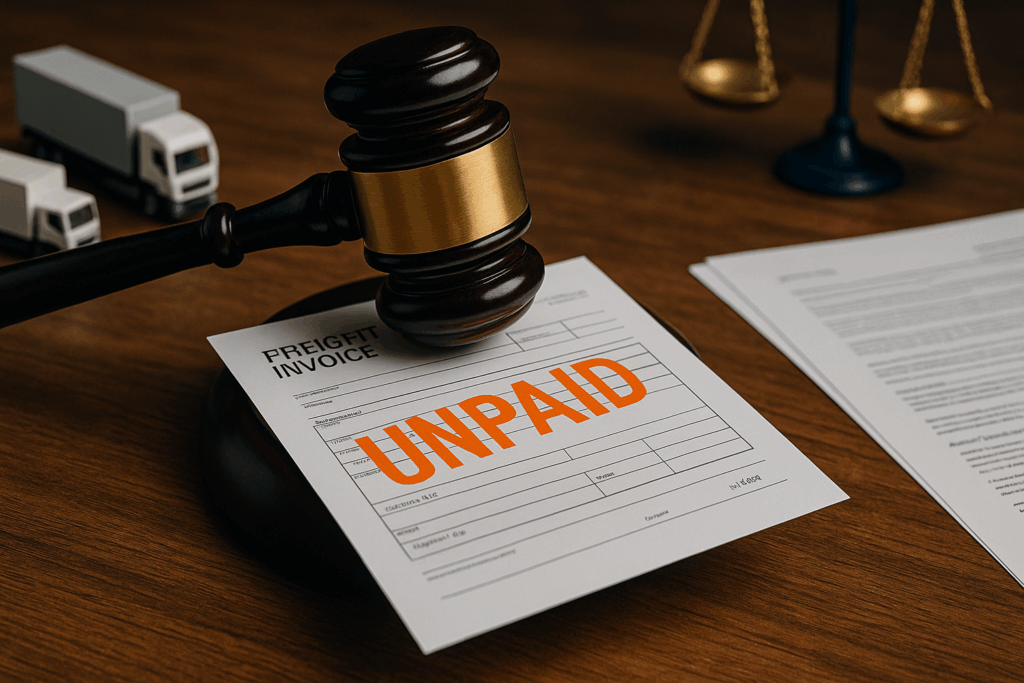
When a broker or shipper doesn’t pay, or backs out of a freight agreement, your first instinct might be to take legal action. But before filing a lawsuit, there’s one critical step that often brings results without court: the demand letter.
A well-crafted freight invoice demand letter can trigger fast payment, show legal intent, and build a paper trail. But do they really work in the freight industry?
In this post, we break down how demand letters fit into freight contract enforcement, when to send one, and what makes them effective.
What Is a Demand Letter in Freight Contract Disputes?
A demand letter is a formal written notice sent to a party who has violated a contract, such as failing to pay a freight invoice or breaching delivery terms. It outlines:
- The nature of the agreement
- The specific breach
- The amount owed or remedy requested
- A deadline for response or resolution
- A warning of potential legal action if ignored
It’s not just a collection notice—it’s a strategic legal tool.
Why Demand Letters Work in Freight Contract Enforcement
In many cases, a strongly worded legal demand freight agreement letter can resolve the dispute without litigation. Here’s why:
1. They Create Legal Pressure Without Filing Suit
The letter signals that you’re serious and legally prepared. For shippers or brokers hoping to stall or ignore the issue, it raises the stakes.
2. They Build a Paper Trail
Courts often view demand letters as evidence that you gave the other party a chance to resolve the dispute voluntarily—strengthening your case if you eventually sue.
3. They Preserve Business Relationships
If you want to avoid burning bridges, demand letters offer a way to resolve payment or contract issues without jumping straight to court or aggressive collections.
What to Include in a Freight Invoice Demand Letter
To be effective, your letter should contain:
- Your legal and business name
- Description of the agreement (e.g., load tendered on [date], delivered on time)
- Details of the breach (e.g., non-payment, failure to provide loads)
- Amount due and documentation (invoice number, rate con, BOL/POD)
- Clear payment deadline (e.g., 7 or 14 days)
- Statement of intended legal action if ignored
- Contact info for resolution
Optional but effective: Include a phrase like “we are prepared to pursue legal remedies, including recovery through litigation or the broker’s surety bond.”
When to Send a Demand Letter
The best time to send a demand letter is:
- After payment is overdue by 15–30 days
- After multiple ignored follow-up emails or calls
- When you’ve gathered all necessary documents
- Before referring the matter to a lawyer or collections agency
Timing matters. Waiting too long can reduce your legal leverage, especially if the broker or shipper is nearing insolvency or disappearing from the industry.
Real-World Example: Demand Letter Triggers Fast Payment
A Texas-based carrier delivered three loads totaling $11,500. Despite multiple follow-ups, the broker remained silent. The carrier’s attorney sent a demand letter referencing the contract and attaching BOLs, rate confirmations, and unpaid invoices.
Within 48 hours, the broker offered full payment to avoid legal action and a bond claim. The matter was resolved without court.
This is a common outcome when freight contract enforcement starts with a solid demand letter.
Should You Send It Yourself or Use a Lawyer?
While you can draft and send your own letter, using a freight contract enforcement lawyer adds impact and legal credibility. Brokers and shippers take letters from attorneys more seriously—especially when the letter references potential litigation or a bond claim.
What If the Demand Letter Fails?
If your demand letter is ignored or rejected:
- You now have a paper trail for court or arbitration
- You can escalate to collections, a bond claim, or file a lawsuit
- If successful in court, you may recover legal fees (if the contract allows)
Even when they don’t result in immediate payment, demand letters are a foundational first step toward enforcing your rights.
Conclusion: Demand Letters Are Powerful When Done Right
In the freight industry, demand letters aren’t just formality—they’re strategy. Whether you’re chasing an unpaid invoice or holding someone accountable for breaching a contract, a strong letter can prompt resolution fast.
They don’t always work—but when written correctly and sent at the right time, they’re one of the most cost-effective tools in freight contract enforcement.
 Need Help Drafting a Legally Enforceable Freight Demand Letter?
Freight Collection Solutions crafts strategic demand letters that compel payment—without the cost of court.