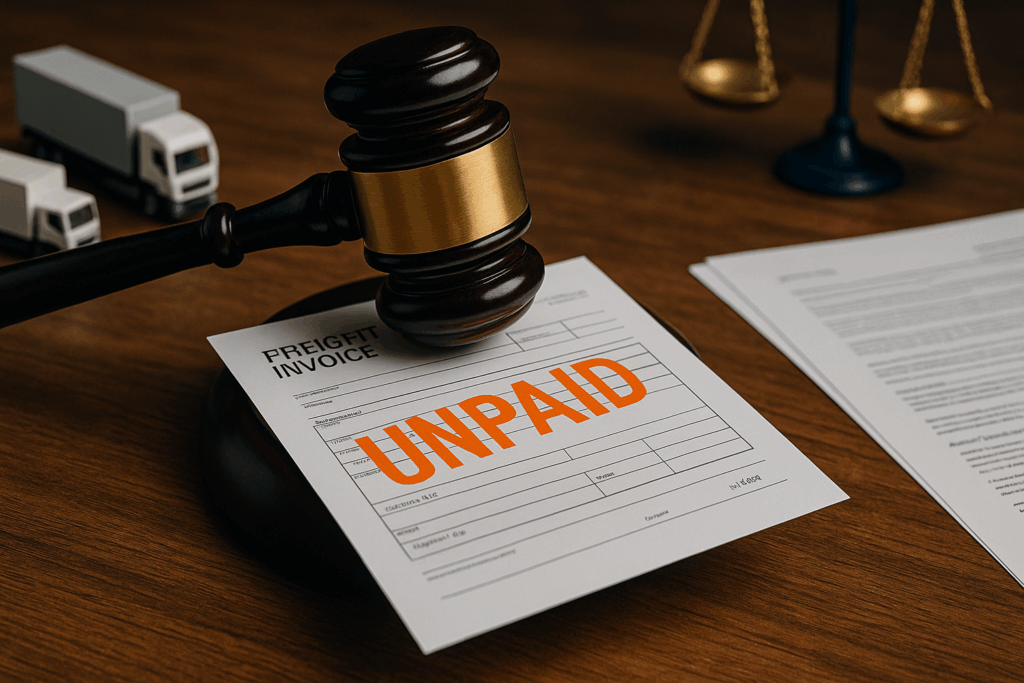
In the world of freight transportation, speed and efficiency are everything. But when it comes to getting paid, there’s one critical document that too many carriers overlook: the carrier-broker agreement.
This legally binding contract outlines everything from payment terms to liability responsibilities—and it can be the key to protecting your business in the event of a freight non-payment lawsuit. Whether you’re new to the industry or a seasoned hauler, understanding the importance of carrier-broker agreements in freight payment can save you thousands of dollars—and countless headaches.
What Is a Carrier-Broker Agreement?
A carrier-broker agreement is a formal contract between a licensed freight broker and a motor carrier. It governs the legal and financial terms under which the broker arranges freight shipments to be hauled by the carrier.
The agreement typically includes:
- Payment terms and deadlines
- Rate confirmation process
- Liability for delays, damage, or loss
- Jurisdiction and dispute resolution
- Accessorial charges and reimbursements
- Requirements for documentation (e.g., PODs, BOLs, invoices)
This document forms the legal foundation of your freight transaction—and without it, you’re far more vulnerable in a commercial litigation for trucking dispute.
Why Carrier-Broker Agreements Matter in Freight Payment Disputes
A well-drafted agreement does more than clarify expectations—it becomes your strongest piece of evidence if the broker refuses to pay.
Here’s why it matters:
 Establishes Enforceable Payment Terms
The agreement should clearly state when and how you will be paid (e.g., Net 30, upon receipt of POD, etc.). If those terms are violated, you can bring a freight non-payment lawsuit based on breach of contract.
Prevents Ambiguity
Without a formal agreement, payment disputes often turn into a game of “he said, she said.” A written contract eliminates ambiguity and increases your chances of winning in court.
Clarifies Jurisdiction
Many agreements include a choice of law and venue clause, which determines where any legal dispute must be resolved. This helps avoid surprise lawsuits in unfamiliar or distant courts.
Allows for Recovery of Legal Fees
If the agreement includes an attorney’s fees clause, you may recover your legal costs if you win a freight payment case.
Essential Clauses Every Carrier-Broker Agreement Should Include
1. Payment Terms
Clearly define:
- Invoice due dates (e.g., within 30 days of delivery)
- Interest on late payments
- Requirements for invoice submission (e.g., copy of BOL, POD)
2. Dispute Resolution
Spell out whether disputes must go to arbitration, mediation, or court—and where.
3. Liability and Insurance
Determine who’s responsible for freight claims, cargo insurance, and how much coverage is required.
4. Documentation Requirements
State what documents the carrier must provide to trigger payment (e.g., PODs, BOLs, lumper receipts).
5. Termination Rights
Specify how and when either party can end the agreement—and what happens to outstanding invoices upon termination.
How Agreements Help in a Freight Non-Payment Lawsuit
When a broker refuses to pay and litigation becomes necessary, the carrier-broker agreement becomes your first line of defense. Courts will examine the contract to determine:
- Did the broker breach the payment terms?
- Were the required documents submitted?
- Was payment delayed without justification?
- Were late fees or penalties owed?
Without this agreement, a judge may be forced to evaluate the situation based on verbal commitments or general industry practice—which rarely favors the carrier.
Case Example: Enforcing Payment Through a Broker Agreement
A refrigerated carrier delivered a load of produce from Georgia to Pennsylvania. The broker refused to pay the $3,400 invoice, claiming the POD was submitted too late.
Luckily, the carrier had a detailed carrier-broker agreement stating payment was due within 30 days of delivery, regardless of POD timing. With help from a commercial litigation for trucking attorney, the carrier filed a freight non-payment lawsuit and won—recovering the full amount plus court costs.
Without the written agreement, the case would’ve come down to conflicting interpretations—and might have been lost.
Best Practices for Creating Strong Carrier-Broker Agreements
Review Every Agreement Before Signing
Don’t just accept the broker’s default template. Review for clauses that limit your rights or hide liability waivers.
Avoid “Pay-When-Paid” Clauses
These clauses delay your payment until the broker is paid by the shipper—putting you at financial risk. If possible, negotiate for “pay within X days regardless of shipper payment.”
Keep Copies and Backups
Maintain digital and physical records of all signed agreements, rate confirmations, and amendments.
Consult an Attorney
A lawyer experienced in commercial litigation for trucking companies can draft or review your agreement to ensure it’s enforceable and favorable to your interests.
Frequently Asked Questions
What if I hauled a load without a signed agreement?
You’re not out of options—but your claim may be weaker. You can still pursue payment based on a rate confirmation, invoice, and delivery proof. However, it’s always better to have a formal contract in place.
Can I refuse to haul loads without a signed agreement?
Yes—and you should. Hauling without a contract puts you at risk of non-payment with no legal protection.
Do all brokers use the same agreement?
No. Terms vary widely. Always read and compare agreements. Some favor the broker heavily and should be negotiated or avoided.
Conclusion: Protect Your Pay With a Signed Agreement
In an industry where freight can change hands in minutes, it’s tempting to skip the paperwork. But when things go wrong, your carrier-broker agreement is the only thing standing between you and a denied payment.
Don’t let verbal promises or email threads replace a contract. Whether you’re working with a broker for the first time or the hundredth, insist on a written agreement that defines your rights and safeguards your payments.
At Freight Collection Solutions, we help carriers enforce their rights under broker agreements—and recover unpaid invoices through legal channels. If a broker refuses to pay, we’re ready to act.