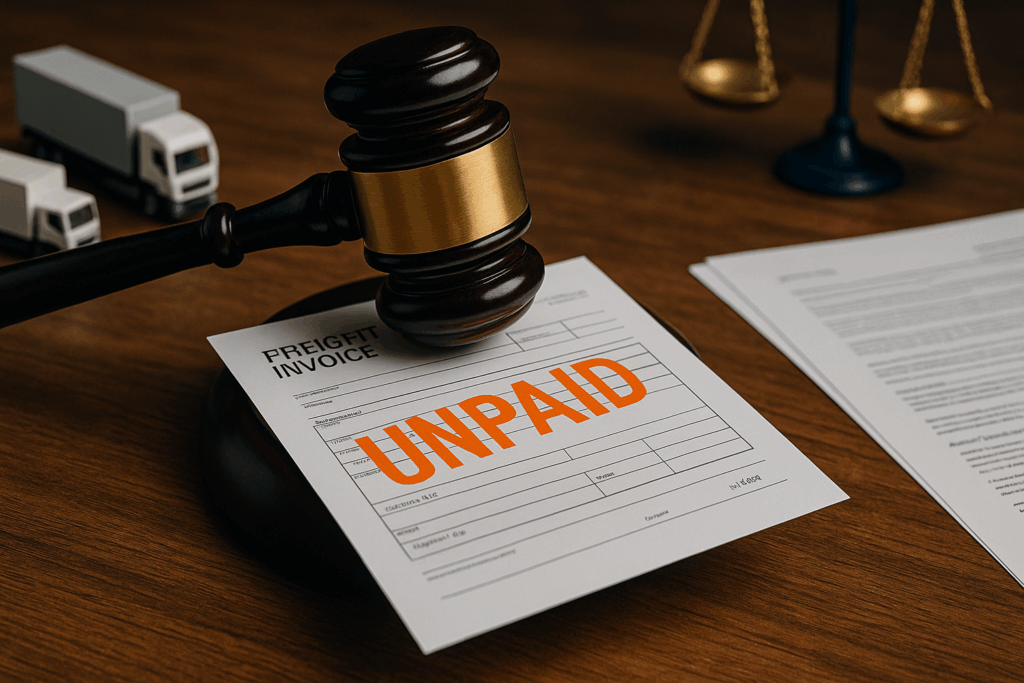
The Impact of Freight Broker Non-Payment on Carrier Operations—and Why Filing a Freight Broker Bond Claim Can Protect You
Getting stiffed on a freight bill doesn’t just sting—it can throw your entire operation off balance.
You counted on that $2,700 invoice to cover fuel, pay your driver, or make your truck payment. Now it’s overdue. The broker won’t respond. And you’re stuck asking the same question every carrier dreads: “What now?”
This article breaks down how freight broker non-payment hurts your business, the long-term consequences, and how the freight broker bond claim process can protect you from major losses.
Freight Broker Non-Payment Isn’t Rare—It’s a Growing Problem
The freight industry runs on trust. But when that trust is broken by a broker who doesn’t pay, the results can be devastating.
Every year, thousands of carriers face broker non-payment. The reasons vary:
- The broker goes out of business
- The broker overspent and can’t pay bills
- The broker intentionally defrauded you
- The shipper never paid the broker—and they pass the blame
Regardless of the reason, one truth remains: you delivered. You earned that money. You’re owed that payment.
And filing a freight broker bond claim might be your only path to recovery.
How Broker Non-Payment Disrupts Carrier Operations
Let’s break it down.
1. Cash Flow Grinds to a Halt
Most carriers operate with tight margins. When one $3,000 invoice goes unpaid, it doesn’t just throw off your books—it affects:
- Payroll
- Fuel cards
- Equipment maintenance
- Insurance premiums
- Your ability to book new loads
If you’re a small carrier or owner-operator, a single unpaid load can cause serious damage to your business in just days.
That’s why the freight broker bond claim exists—to give you a way to recover that cash before the damage snowballs.
2. Delays in Paying Drivers and Owner-Operators
If you rely on leased drivers or run a fleet, non-payment from a broker can strain your relationship with drivers who still expect to be paid.
You can’t tell them, “The broker ghosted me.” That’s not their problem. But it’s suddenly your problem—and one that spreads fast across your company.
A fast, clean freight broker bond claim can help you get that money back so your drivers don’t feel the effects of the broker’s dishonesty.
3. Credit Issues and Late Fees
When brokers don’t pay, carriers often lean on credit to stay afloat.
- Fuel cards max out
- Loan payments get delayed
- Vendors impose late fees
These cascading effects don’t just cost you money—they hurt your credit rating, which can make it harder to grow, buy new equipment, or refinance in the future.
Don’t let unpaid invoices sit. Filing a freight broker bond claim within weeks—not months—can stop the bleeding.
4. Missed Opportunities for Growth
When cash flow tightens, so do your options. You may:
- Turn down profitable loads because you can’t cover fuel
- Miss out on truck or trailer upgrades
- Delay hiring qualified drivers
Instead of scaling up, you’re forced to play defense. That’s the true cost of broker non-payment.
Getting your money back through the freight broker bond claim process may be the one thing that keeps your business moving forward.
The Emotional and Mental Strain on Owners
It’s not just the financial hit—it’s the stress.
- You worry about keeping the lights on
- You can’t sleep, waiting for payment that may never come
- You spend hours chasing a broker instead of running your business
And here’s the worst part: it’s not your fault.
You did your job. You delivered the freight. Now you’re stuck holding the bag.
Filing a freight broker bond claim isn’t just a legal step—it’s a way to take control and get justice.
When to File a Freight Broker Bond Claim
You should file a freight broker bond claim as soon as:
- Your invoice is 30+ days overdue
- The broker stops returning calls or emails
- You verify they still have an active bond
Don’t give them 90 days. Don’t give them excuses. The faster you file, the better your odds of recovering full payment—especially before other carriers drain the bond.
Step-by-Step: How to File a Freight Broker Bond Claim
Step 1: Get the Broker’s MC Number
Use this to look up their bond status in the FMCSA Licensing & Insurance portal.
Step 2: Verify the Bond
Make sure their BMC-84 is active as of your delivery date. If it’s not active, you’ll need to explore broker bond collection instead.
Step 3: Gather Your Documents
Include:
- Signed rate confirmation
- BOL with consignee signature
- Invoice
- Delivery date and location
- All communication with the broker
Step 4: Contact the Surety Company
Get their claim instructions. Ask:
- What forms are required?
- Where do I send documents?
- What’s the expected timeline?
Step 5: Submit Your Claim
Send your full packet—digitally or by mail, depending on the surety’s rules. Then follow up every 2–3 weeks until the claim is resolved.
What If the Bond Has Already Been Maxed Out?
Each bond only covers $75,000 total. If the broker owes several carriers, you may only get a percentage of what you’re owed—or nothing at all.
This is why speed matters when filing a freight broker bond claim.
If you miss your shot at the bond, you’ll have to:
- Send final demand letters
- File complaints with the FMCSA
- Sue in small claims or civil court
- Hire a broker bond collection agency
All of those paths take longer and may involve upfront costs.
How FMCSA Bond Claim Services Can Help
If you’re tired of chasing brokers or dealing with claim forms, FMCSA bond claim services can take over the process for you.
They:
- Confirm bond status
- Prepare the documents
- File your freight broker bond claim
- Handle follow-ups and resubmissions
They often work on a contingency basis—meaning no fees unless they recover money for you.
The Long-Term Risk of Not Acting
If you don’t act quickly when a broker doesn’t pay, your business pays the price—not just now, but down the road.
Letting unpaid invoices slide:
- Trains brokers to delay or avoid paying
- Weakens your ability to cover operating costs
- Jeopardizes your carrier reputation with lenders and insurers
Filing a freight broker bond claim isn’t just about one invoice—it’s about protecting your long-term stability.
FAQs About Freight Broker Non-Payment and Bond Claims
What’s the time limit to file a freight broker bond claim?
Usually 12–18 months from delivery, depending on the surety. But file within 45–60 days for best results.
Can I still work with the broker while I file a claim?
Yes, but be cautious. Once you file a freight broker bond claim, the relationship may shift. Protect your own interests first.
What if the broker says they never got the invoice?
That’s why email or EDI submission is critical. Keep records. If you have proof of delivery and no payment, the surety company can still process your claim.
Conclusion: Don’t Let Broker Non-Payment Derail Your Business
Broker non-payment isn’t just annoying—it’s dangerous to your business.
It kills your cash flow. It hurts your credit. It stalls your growth. And it adds stress you shouldn’t have to carry.
The freight broker bond claim exists for this exact reason—to give you a clear, legal path to recover what you’re owed.
If you’re facing a non-paying broker, don’t let it spiral. File your claim. Fight back. And keep your operation rolling.
Contact Us Today for Immediate Assistance
If you’re facing unpaid freight invoices and need help getting paid, Freight Collection Solutions Law Group is here for you. Let us handle the legal details while you focus on your business.
For immediate assistance, contact us at 713-940-1886 or fill out the form.