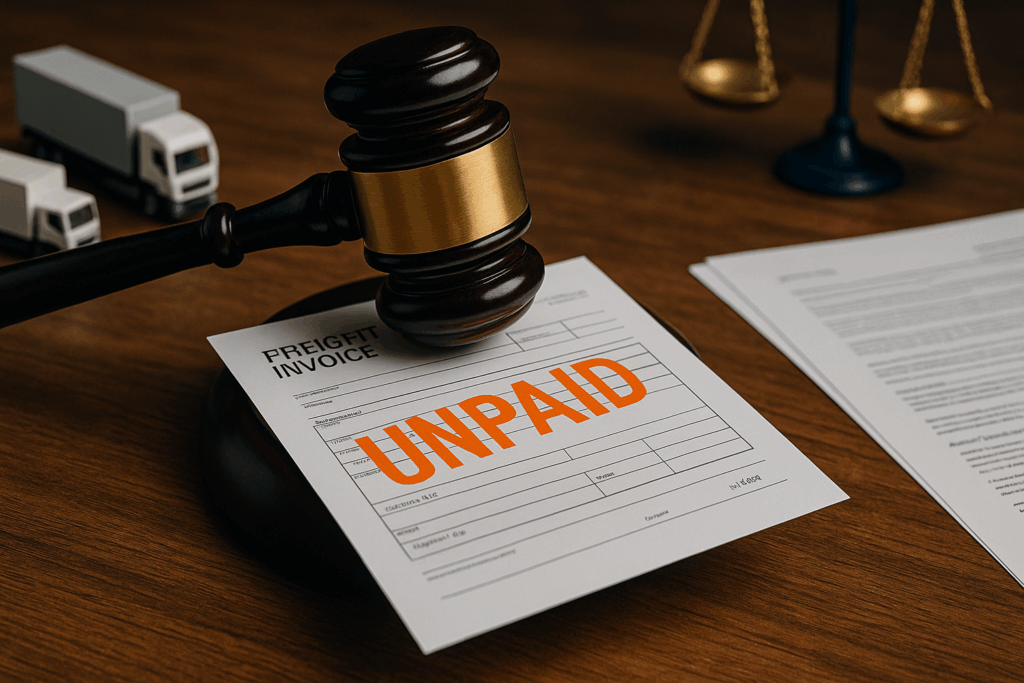
Legal Options for Carriers When a Freight Broker Fails to Pay: How to Use a Freight Broker Bond Claim to Recover What You’re Owed
You picked up the load. You delivered on time. The BOL is clean. The shipper was satisfied. But the broker? Silent.
No payment. No reply. Just radio silence.
Unfortunately, if you’ve been in the freight industry for long, this scenario probably sounds familiar. The question is—what can you do when a broker ghosts you on payment?
The answer starts with the freight broker bond claim process. But if that’s not enough, you’ve still got powerful legal options on your side.
This guide lays out every legal path you can take to get paid when a broker fails to deliver on their end of the deal.
The First Legal Line of Defense: The Freight Broker Bond Claim
The FMCSA requires every licensed freight broker in the United States to carry a $75,000 surety bond (BMC-84). That bond exists solely to protect carriers when brokers don’t pay.
Filing a freight broker bond claim is the first and most effective legal step you should take.
When you file a claim with the surety company that backed the broker’s bond, you trigger a legal obligation for them to investigate your complaint. If your paperwork is in order—and the bond has funds left—you can get paid without going to court.
When to File a Freight Broker Bond Claim
You should file a freight broker bond claim when:
- The payment due date (usually NET 30) has passed
- The broker ignores your follow-up calls or emails
- You have a signed rate confirmation, BOL, and invoice
- You suspect the broker is insolvent or out of business
Don’t wait months chasing dead ends. Time is your enemy—especially since bonds are capped at $75,000 and may be depleted if others file before you.
What If the Bond Claim Isn’t Enough?
Sometimes the freight broker bond claim gets denied. Or maybe you file too late. Or worse—the bond has already been exhausted by other claims.
Don’t panic. You’ve still got other legal tools at your disposal.
Let’s break down your next best legal options.
Option 1: Send a Final Demand Letter
Before you escalate to court, send a final written demand. This gives the broker one last chance to pay before you file a freight broker bond claim or pursue legal action.
A well-crafted demand letter should:
- State the amount owed
- Reference the load number, rate, and delivery details
- Include a copy of the invoice and BOL
- Give a deadline (e.g., 5–10 business days) to respond or pay
- Mention that legal action and a bond claim will follow
Sometimes, this alone is enough to trigger payment—especially if the broker is still operating.
Option 2: Small Claims Court
If your unpaid invoice is under your state’s small claims limit (usually $5,000–$10,000), you can sue the broker in small claims court.
You don’t need a lawyer. You’ll just need:
- A copy of your contract or rate confirmation
- Proof of delivery (POD, BOL)
- Proof that payment is overdue
- Copies of any communications
Winning a judgment means you can then pursue broker bond collection, bank garnishment, or other recovery.
Tip: Filing a small claim doesn’t prevent you from also filing a freight broker bond claim.
Option 3: File a Lawsuit in Civil Court
If the amount owed is too large for small claims court—or if the broker has a pattern of fraud—you can sue in civil court.
This is often done by:
- Owner-operators owed high-value invoices
- Fleets with multiple unpaid loads
- Carriers dealing with brokers operating under multiple business names
You’ll need to work with an attorney, which may involve upfront costs, unless you’re working on contingency.
This option can also be combined with a freight broker bond claim—especially if you want to recover interest, legal fees, or damages beyond the bond limit.
Option 4: Use FMCSA Bond Claim Services or Legal Recovery Specialists
If you don’t want to chase paperwork, call courts, or track down a disappearing broker, a professional recovery team may be your best option.
FMCSA bond claim services help with:
- Filing your freight broker bond claim quickly and accurately
- Contacting the surety company and handling communication
- Preparing legal notices or demand letters
- Helping you escalate to collections or litigation if needed
They often work on a contingency fee—meaning they only get paid if you do.
Option 5: Report the Broker to the FMCSA
Even if the freight broker bond claim is denied or delayed, you can still report unethical or illegal behavior to the FMCSA.
Reasons to file a complaint:
- Operating without a valid bond
- Pattern of non-payment
- Fraudulent MC use
- Double brokering
FMCSA complaints don’t get you paid directly, but they can trigger investigations, lead to license suspension, and prevent the broker from continuing to operate.
Option 6: Hire a Commercial Collection Agency
If the broker has other assets—or has skipped out on payment intentionally—you can hire a collection agency that specializes in broker bond collection.
They’ll:
- Send formal legal notices
- Contact the broker’s clients and vendors
- Report the debt to credit agencies
- Pursue court judgments if necessary
Collection agencies may take 15%–40% of recovered funds, depending on the complexity of the case. Still, it’s better than walking away with nothing.
What If You Win a Judgment and Still Don’t Get Paid?
Winning in court doesn’t guarantee payment. If the broker refuses to pay a judgment, you can:
- Garnish their bank account
- Place liens on assets
- Use local law enforcement to enforce judgments
A lawyer or commercial collection firm can help you navigate post-judgment recovery.
But again, this is why the freight broker bond claim should be your first move—it’s faster and often cleaner.
Key Documents You’ll Need for Any Legal Option
Whether you’re filing a freight broker bond claim, suing in court, or sending a demand letter, you’ll need:
- Rate confirmation (with agreed rate and terms)
- Signed BOL or POD
- Invoice (unpaid and properly dated)
- Proof of communication (emails, texts, notes)
- Broker’s MC number and business name
Keep all documentation organized and backed up. The clearer your records, the stronger your case.
FAQs About Legal Recovery Options for Carriers
Can I file a freight broker bond claim and sue the broker at the same time?
Yes. They are two separate paths. Filing a freight broker bond claim does not prevent you from pursuing additional legal remedies.
What if I used a factoring company?
Your factor now owns the invoice. They must file the freight broker bond claim or sue the broker on your behalf. Check your contract with the factoring company.
What if the broker filed for bankruptcy?
If the broker has declared bankruptcy, you may become a creditor in their bankruptcy case. But if their bond is still active, you can still file a freight broker bond claim for what you’re owed.
Final Word: Use the Legal Tools Available to You
Getting stiffed by a broker is bad—but doing nothing is worse.
You have legal tools to fight back. The freight broker bond claim is your first line of defense. If that doesn’t work, you still have demand letters, small claims, civil court, FMCSA complaints, and professional recovery services.
Pick your path. Use your paperwork. Protect your business.
And if you don’t want to handle it alone—we’re here to help.
Contact Us Today for Immediate Assistance
If you’re facing unpaid freight invoices and need help getting paid, Freight Collection Solutions Law Group is here for you. Let us handle the legal details while you focus on your business.
For immediate assistance, contact us at 713-940-1886 or fill out the form.