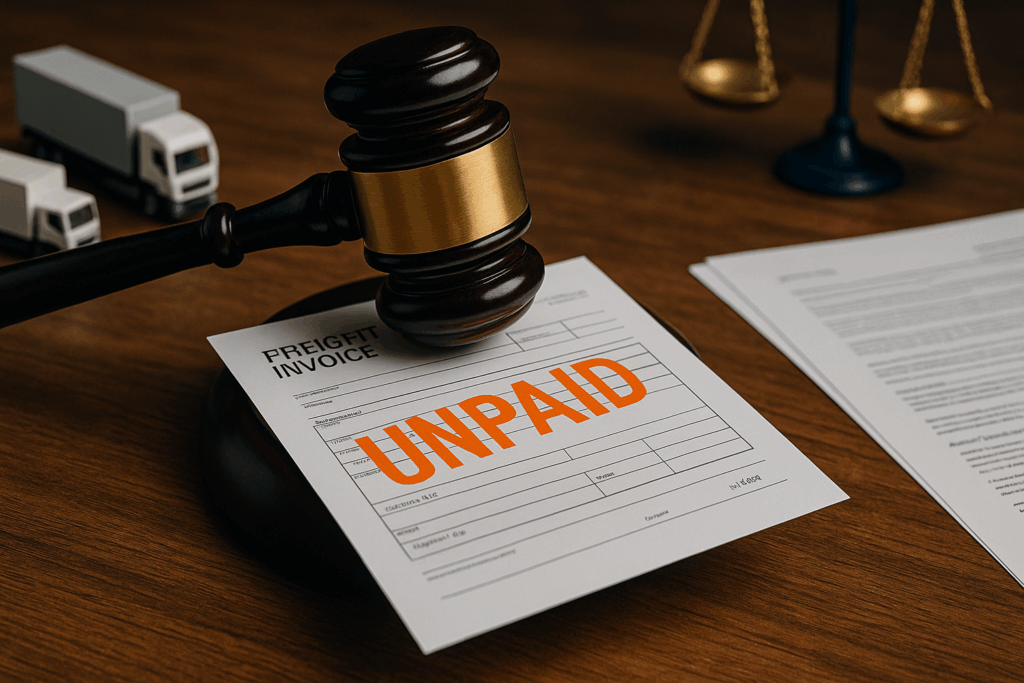
Common Mistakes to Avoid When Filing a Freight Broker Bond Claim
So, the broker isn’t paying. You delivered the load. You sent the invoice. You’ve followed up more times than you care to count. Nothing.
At this point, you’re ready to file a freight broker bond claim—and that’s the right move. But here’s the truth: most denied claims don’t get rejected because the carrier was wrong. They get denied because the claim process was done wrong.
In this post, we’ll break down the most common mistakes carriers make when filing a freight broker bond claim—and exactly how to avoid them so you can get paid without delay.
Why Filing a Freight Broker Bond Claim Is So Important
Every licensed broker must post a $75,000 surety bond through the FMCSA. This bond is your legal right as a carrier. If a broker fails to pay, you can file a freight broker bond claim directly with the surety company to recover the money.
The bond exists to protect you, not the broker.
But getting paid through a bond claim isn’t automatic. It takes paperwork, deadlines, and following the right steps. A simple mistake could cost you the entire claim.
Mistake #1: Waiting Too Long to File
The #1 reason claims get denied? You waited too long.
You typically have 12–18 months from the delivery date to file your freight broker bond claim—but that window can shrink fast if:
- The broker’s bond gets canceled
- The broker files bankruptcy
- The bond limit gets used up by other carriers
Solution: Don’t wait more than 30–45 days after an unpaid invoice to start preparing your bond claim. The longer you wait, the more risk you take.
Mistake #2: Missing or Incomplete Documentation
Your freight broker bond claim is only as strong as the paperwork behind it. If you’re missing even one key document, your claim could be delayed—or denied.
Required documents include:
- Rate confirmation (signed by broker)
- Clean BOL (with consignee signature)
- Proof of delivery (POD)
- Invoice
- Any communication showing broker acknowledged the debt
Solution: Keep digital backups of every document for every load. Confirm that signatures, dates, and payment terms are clearly visible.
Mistake #3: Filing With the Wrong Surety Company
A freight broker bond claim must be filed with the correct surety company—the one that held the bond at the time of the load.
Too many carriers file with the wrong company because:
- The broker switched bonds recently
- The info online was outdated
- They used a third-party database that hadn’t been updated
Solution: Always check the FMCSA’s official Licensing & Insurance system. Search by MC number and confirm the bond’s effective date matches your shipment.
Mistake #4: Ignoring the Surety’s Instructions
Each surety company has its own process for handling a freight broker bond claim. Some want a claim form. Others want affidavits. Some accept digital submissions. Others require originals by mail.
Solution: Call or email the surety company before filing. Ask:
- What documents are required?
- Do you have a claim form?
- Do I need to notarize anything?
- Where should I send the claim?
- Can I email it, or must it be mailed?
Following their instructions avoids costly delays.
Mistake #5: Filing One Big Claim Instead of Breaking It Down
If a broker owes you for multiple loads, don’t lump them into one giant spreadsheet with a total at the bottom. Surety companies need one clear entry per load.
Solution: For each load, include:
- The unique rate confirmation
- The BOL
- The individual invoice
- Separate delivery and pickup details
Group them in one packet—but label each clearly. The cleaner it looks, the faster it gets processed.
Mistake #6: Believing Verbal Agreements Will Help
A freight broker bond claim only works with written proof. The surety company doesn’t care what the broker “promised” on a phone call. If it’s not in writing, it doesn’t count.
Solution: Always confirm details over email or text. Never rely on verbal commitments. Documentation wins claims.
Mistake #7: Not Following Up
Some carriers submit a freight broker bond claim and assume the job is done. Big mistake. Surety companies handle thousands of claims. If yours gets stuck in a backlog, no one’s chasing you.
Solution: Follow up every two weeks. Ask:
- Has the claim been reviewed?
- Is more documentation needed?
- What’s the expected decision timeline?
Stay in their inbox until you have an answer—or a check.
Mistake #8: Giving Up After a Denial
Some bond claims are denied initially—but that doesn’t mean you’ve lost for good. Many carriers give up after the first “no.” But with a little tweaking, your freight broker bond claim can still be approved.
Solution: Appeal the decision. Ask the surety company why the claim was denied. Provide any missing documentation. You can also file a complaint with the FMCSA if you suspect bad faith.
Mistake #9: Not Using FMCSA Bond Claim Services
You don’t need to file a freight broker bond claim alone. There are professionals who do this every day—quickly, cleanly, and effectively.
They can help with:
- Finding the correct surety
- Organizing paperwork
- Submitting the full claim
- Following up until it’s resolved
If your time is better spent on the road than on hold with a surety, this option is worth considering.
Real-World Example: A Costly Mistake
A reefer carrier in Florida submitted a freight broker bond claim with everything—rate confirmations, BOLs, and invoices. But they forgot to sign one page. The surety sent a request for correction, but it was missed in their spam folder.
By the time they refiled, the bond had been maxed out by other carriers.
Lesson: Even small mistakes can cost you thousands. Read the instructions. Check your email. Be thorough.
What Happens After You File the Claim?
Once your freight broker bond claim is received:
- The surety investigates.
- They may contact you or the broker for more info.
- If your claim is valid, payment is issued.
If the bond is already depleted, the surety may prorate what’s left among all claimants—or deny further claims.
This is why timing and documentation are everything.
FAQs About Freight Broker Bond Claims
How many times can I file a bond claim against the same broker?
As many times as you have valid unpaid loads—so long as the bond is still active and has money remaining.
Can I file a bond claim for detention, layover, or accessorials?
Only if those charges were agreed to in writing and included in the signed rate confirmation. Otherwise, the surety will reject them.
What if I used a factoring company?
Your factoring company now owns the invoice. They’ll need to file the freight broker bond claim, not you.
Final Thoughts: File It Right, Get Paid Faster
The freight broker bond claim process exists to protect you. But it only works if you know how to use it. Missing documents, wrong info, or just waiting too long can ruin your chance to recover what you earned.
So don’t make these mistakes.
Deliver the freight. Keep your paperwork clean. File your claim properly. And if it’s too much to handle solo? Let the pros do it for you.
Contact Us Today for Immediate Assistance
If you’re facing unpaid freight invoices and need help getting paid, Freight Collection Solutions Law Group is here for you. Let us handle the legal details while you focus on your business.
For immediate assistance, contact us at 713-940-1886 or fill out the form.