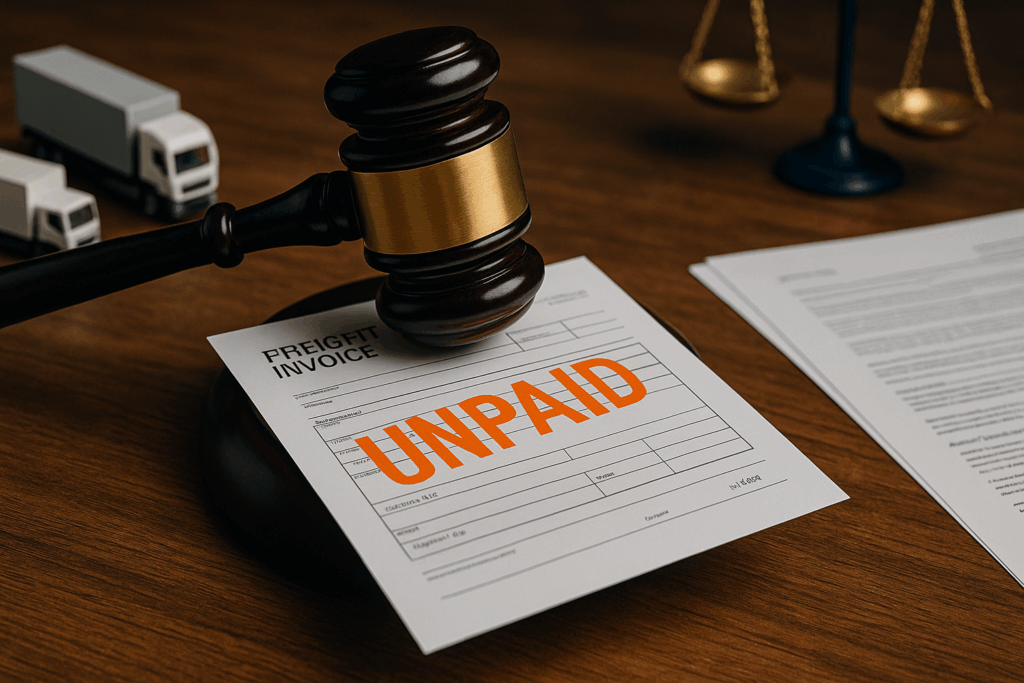
The Role of Surety Bonds in Protecting Carriers from Unpaid Freight Invoices: Why the Freight Broker Bond Claim Matters
When a freight broker fails to pay for a completed load, it’s not just a missed paycheck—it’s a direct attack on your livelihood. And it happens more often than you’d think. But there’s a built-in legal safeguard that exists for one reason only: to protect you. That safeguard is the freight broker bond claim.
Every licensed freight broker must post a $75,000 surety bond, and that bond is your backup plan when things go wrong. In this article, we’ll break down how freight broker bond claims protect carriers, how these bonds work, and how to use them to your advantage.
Let’s get to it.
What Is a Surety Bond for Freight Brokers?
A freight broker surety bond is a legal contract between three parties:
- The Broker (Principal) – the one who must follow the rules and pay invoices.
- The FMCSA (Obligee) – the agency that requires the bond.
- The Surety Company – the financial company that backs the broker’s bond.
If the broker fails to pay a carrier for a load that was delivered, the carrier can file a freight broker bond claim directly with the surety. The surety will investigate, and if your claim is valid, they’ll issue you payment—up to the bond limit.
This process lets carriers avoid court and go straight to the financial source.
Why Do Surety Bonds Exist?
The freight broker bond exists because too many brokers were failing to pay carriers. Before bonds were required, a broker could disappear without paying—and truckers had little legal recourse.
Now, thanks to the FMCSA’s BMC-84 bond requirement, every licensed broker must guarantee payment. The freight broker bond claim exists so you can enforce that guarantee.
When Can a Carrier File a Freight Broker Bond Claim?
You should file a freight broker bond claim when:
- A broker fails to pay your invoice
- You’ve delivered the load and have proof
- The broker won’t return calls or emails
- You’re past the payment due date
- You hear the broker is shutting down
Even if the broker says “we’re waiting on the shipper to pay us,” that’s not your problem. You delivered the freight. The broker owes you. That’s what the bond is for.
How Surety Bonds Protect Carriers
Surety bonds give carriers a reliable way to recover money without hiring a lawyer or going to small claims court. When a freight broker bond claim is filed, the surety company must investigate it.
If your documents show that:
- You delivered the freight
- The broker agreed to the load and rate
- The invoice is unpaid
…the surety will issue payment, up to the $75,000 bond amount.
This is often faster than waiting on slow-paying brokers or chasing them across multiple states.
Step-by-Step: How to Use a Freight Broker Bond to Get Paid
Step 1: Verify Bond Status
Before you file a freight broker bond claim, verify that the broker had an active bond when the load was delivered. Go to the FMCSA’s Licensing & Insurance portal and check their profile.
Make sure the bond is:
- Active
- With a listed surety company
- Effective as of your load’s delivery date
If the bond is canceled or inactive, you may need to pursue broker bond collection through court instead.
Step 2: Gather Documentation
You’ll need clear, written proof to file a freight broker bond claim, including:
- Signed rate confirmation
- BOL with consignee signature
- Proof of delivery (POD)
- Invoice showing amount owed
- Any emails or texts showing communication or non-payment
This is your legal ammo. The stronger your file, the faster you’ll get paid.
Step 3: Submit Your Claim
Contact the surety company listed on the FMCSA site and ask:
- Do you have a claim form?
- Where do I send documents?
- What’s the processing time?
- Do you accept digital submissions?
Follow their instructions carefully. Submit your full packet—and keep copies.
Step 4: Follow Up Until Paid
After you submit your freight broker bond claim, follow up every 1–2 weeks. Stay in touch. Respond to questions. Don’t assume silence means progress.
Most claims are reviewed within 30–60 days. If approved, the surety will send you a check directly.
Real-World Example: Bond in Action
A flatbed carrier in North Carolina delivered three loads for a broker in Ohio. Total owed: $8,400. The broker vanished. No phone response. No check.
The carrier filed a freight broker bond claim, submitting clean paperwork. The surety approved the claim, and within 45 days, the carrier had a check in hand—without ever hiring a lawyer.
That’s the power of the bond system working the way it should.
What Happens If the Bond Is Maxed Out?
Here’s the hard part: the bond is capped at $75,000. If a broker owes more than that across multiple carriers, the bond might not cover everyone.
If you’re late to file your freight broker bond claim, you might only get partial payment—or nothing at all.
That’s why speed matters. File fast. Don’t wait months hoping the broker comes around.
Common Mistakes That Delay Claims
Avoid these errors when filing a freight broker bond claim:
- Sending incomplete documents
- Filing with the wrong surety company
- Waiting too long (more than 12 months from delivery)
- Submitting generic spreadsheets instead of real invoices
- Assuming verbal agreements count (they don’t)
One missing BOL signature can cost you thousands. Double-check everything.
What If the Claim Gets Denied?
Sometimes your freight broker bond claim is denied due to:
- Incomplete documents
- Dispute over the load
- Bond already exhausted
- Broker disputing the debt
If that happens, don’t panic. You can appeal or refile. Or you can shift to broker bond collection, which might include legal action, court filings, or using a collection service.
Do FMCSA Bond Claim Services Help?
Yes. If you don’t want to deal with paperwork or delays, hiring a professional team that handles FMCSA bond claim services can make a big difference.
They:
- Locate the right surety
- Prepare and file all paperwork
- Handle follow-ups and rejections
- Maximize your chances of full recovery
They get paid when you do, and their success rate is often higher because they speak the surety’s language.
The Difference Between Bond Claims and Broker Collections
- A freight broker bond claim is a legal request to the surety company to pay what the broker owes.
- Broker bond collection usually refers to legal action or aggressive debt recovery.
If the bond doesn’t cover you—or the broker never had one—you may need to move to court collections.
But the bond is almost always the first (and best) option.
Final Thoughts: Use the Bond. It’s There for You.
The freight broker bond claim process was built for one reason—to protect carriers from brokers who don’t pay. You shouldn’t have to fight for the money you already earned.
If you delivered the load, followed the contract, and sent the invoice—file the claim.
And if you don’t want to do it yourself? We’ll do it for you.
Contact Us Today for Immediate Assistance
If you’re facing unpaid freight invoices and need help getting paid, Freight Collection Solutions Law Group is here for you. Let us handle the legal details while you focus on your business.
For immediate assistance, contact us at 713-940-1886 or fill out the form.