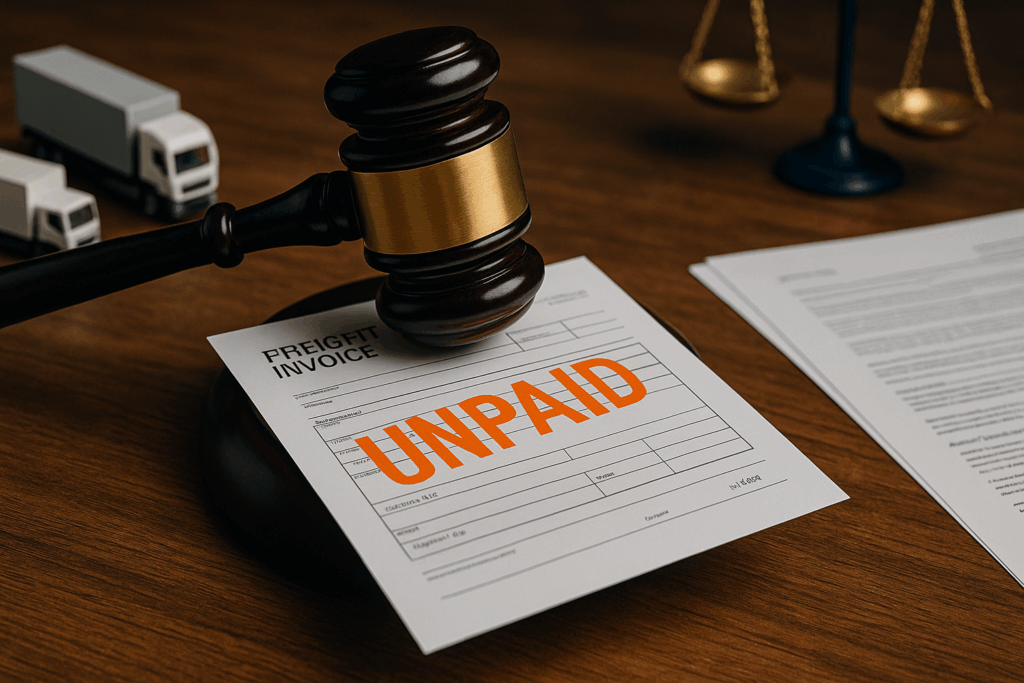
When freight goes unpaid, many carriers are left wondering who they can legally pursue. If the broker disappears or refuses to pay, and the shipper claims they’ve already fulfilled their obligation, can the consignee—the party receiving the shipment—be held liable?
This question has become increasingly important in today’s fragmented logistics chain. In this post, we break down how consignee liability works, when it applies, and how carriers can protect themselves from financial loss through freight dispute resolution and the help of a qualified freight payment dispute lawyer.
Who Is the Consignee?
The consignee is the person or company receiving delivery of the freight. In many shipping transactions, they’re simply the endpoint in the supply chain—not involved in payment or dispatching.
However, when there’s freight broker non-payment or invoice disputes, the line between roles can blur—especially if the consignee accepted goods and benefited from the delivery.
When Can a Consignee Be Held Liable?
In most freight transactions, the carrier’s contract is with the broker or shipper—not the consignee. But there are exceptions. Courts may hold the consignee liable for unpaid freight invoices if:
1. The Consignee Promised to Pay
If there is a signed agreement, bill of lading, or email correspondence showing the consignee agreed to pay for the freight—even partially—they can be held accountable.
2. The Broker Was Acting as the Consignee’s Agent
In some cases, the broker is not an independent contractor but an agent of the consignee. If the consignee directed or benefited from the arrangement, courts may find them liable.
3. The Consignee Accepted Goods Without Objection
If the consignee accepted delivery, used the product, and made no effort to verify payment status, some courts see that as “unjust enrichment.” This can justify legal action.
4. There’s No Other Viable Recovery Option
If the broker has vanished, gone bankrupt, or defaulted, the carrier may pursue the consignee as a last resort under equitable principles.
Key Legal Cases That Shaped Consignee Liability
Several court decisions provide precedent for holding consignees liable:
- Southern Pacific v. Commercial Metals (1981): The court ruled that a consignee who accepted delivery and benefited from it without paying could be held liable.
- Missouri Pacific Railroad Co. v. National Milling Co.: The consignee was found liable because they failed to verify whether the freight bill was paid, and they received the benefit of the delivery.
These cases show how important the consignee’s actions—and documentation—can be in freight dispute resolution.
Documentation That Can Support Your Case
If you’re pursuing a consignee for unpaid freight invoices, gather evidence that shows:
- Who authorized the shipment
- Who accepted the delivery
- Any payment agreements or terms
- The signed bill of lading or POD showing consignee receipt
- Communications involving payment instructions
The more documentation you can provide, the stronger your legal standing.
When Consignees Aren’t Liable
Consignees are not typically liable when:
- They are merely the receiver of goods with no contractual relationship
- They had no knowledge or control over the broker’s payment obligations
- The bill of lading does not list them as the party responsible for charges
If you’re unsure where the consignee stands, consult a freight payment dispute lawyer to assess your legal position.
How to Avoid Consignee Confusion
The best strategy is always prevention. Here’s how to keep payment responsibility clear from the start:
 Use Precise Bills of Lading
Ensure the BOL states who is responsible for payment—broker, shipper, or consignee. Avoid vague “Freight Prepaid” or “Collect” terms without clarification.
Include Payment Terms in Rate Confirmations
List the paying party, payment deadlines, and late fee terms in writing—signed by both parties.
Confirm Who Authorized the Load
Know exactly who hired you. If the broker is acting on behalf of another party, get written confirmation of agency.
Work With Trusted Freight Collection Experts
At Freight Collection Solutions, we help you recover payment from the right party. Whether it’s a broker, shipper, or consignee, we investigate liability and take the appropriate legal steps to secure your funds.
FAQs About Consignee Liability
Can I sue the consignee directly for unpaid freight invoices?
Yes—if they had a legal or contractual obligation to pay, or if they received goods knowing payment was still due. A lawyer can evaluate if a lawsuit is viable.
What if the consignee says they already paid the broker?
You may still be able to pursue them if:
- The broker never paid you
- The consignee failed to verify payment status
- You can prove the consignee benefited unfairly
Is the consignee responsible if the bill of lading lists them?
Possibly. Being listed on the BOL increases their potential liability, especially if there’s no indication that freight was prepaid.
Protect Your Freight Business from Unpaid Invoices
Freight broker non-payment can quickly spiral into legal confusion. Knowing when a consignee can be held liable—and how to prove it—is critical in recovering what you’re owed.
At Freight Collection Solutions, we specialize in holding the right parties accountable. From contract review to formal demands and litigation, we fight to ensure our clients get paid.