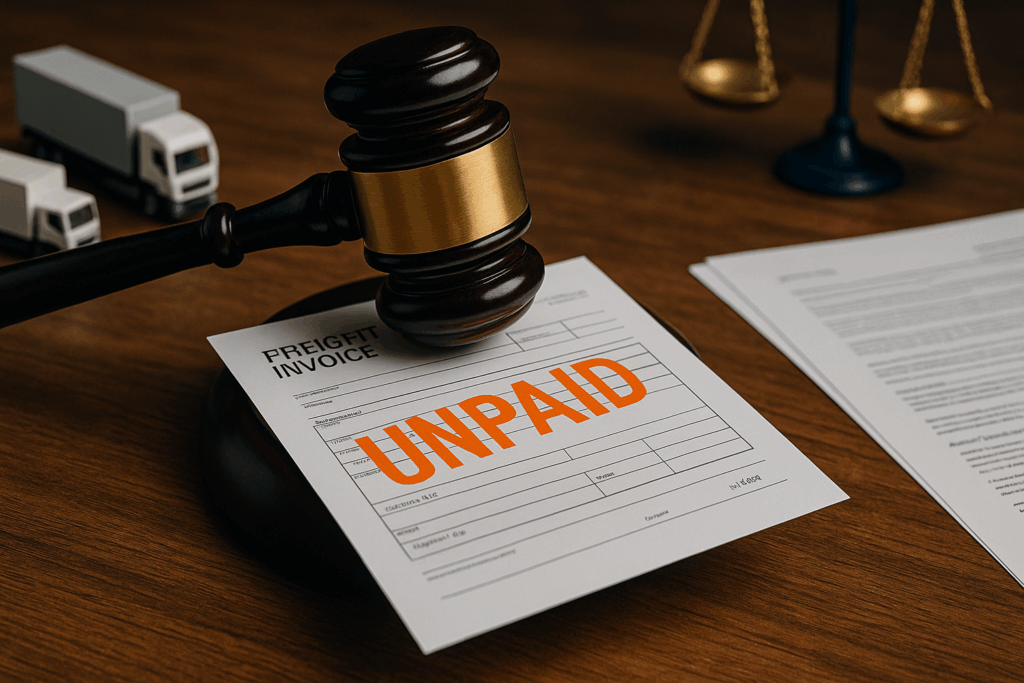
When freight invoices go unpaid, time is money—and the longer a dispute drags on, the more your business suffers. Choosing the right resolution path is key. Should you pursue mediation to save time and costs, or go straight to litigation for a legally enforceable judgment?
In this blog, we’ll break down the pros and cons of each option and help you decide which route is best for your situation. Whether you’re dealing with freight broker non-payment, consignee disputes, or double payment freight charges, understanding these processes can save you thousands in unrecovered invoices.
What Is a Freight Payment Dispute?
A freight payment dispute arises when one party—usually the broker or shipper—fails to pay a carrier for completed freight services. These disputes may involve:
- Unpaid freight invoices
- Short payments
- Chargebacks for alleged service issues
- Conflicting documentation
- Disputes over liability between shipper, broker, and consignee
Whether intentional or accidental, payment disputes disrupt your revenue and require a resolution strategy.
Option 1: Mediation
Mediation is a voluntary, non-binding process where both parties meet (virtually or in person) with a neutral third-party mediator to try to reach a settlement.
 Pros of Mediation:
- Faster resolution: Cases are often settled within weeks.
- Lower cost: Mediation avoids court fees and drawn-out litigation expenses.
- Preserves relationships: Less confrontational than court, especially useful in repeat business scenarios.
- Flexible outcomes: Parties can agree on custom payment plans or partial settlements.
 Cons of Mediation:
- Non-binding: If the other party walks away, you’re back to square one.
- Relies on cooperation: Mediation only works if both sides are willing to talk.
- No enforceability: Agreements reached in mediation must be formalized in writing to be enforceable.
Mediation is ideal when there’s a misunderstanding, communication breakdown, or potential for continued business—especially for smaller freight dispute resolution matters under $10,000.
Option 2: Litigation
Litigation involves filing a lawsuit in small claims or civil court to legally compel the other party to pay.
Pros of Litigation:
- Legally binding: A court judgment can be enforced through liens, wage garnishments, or bank levies.
- Creates pressure: Lawsuits often motivate brokers and shippers to settle quickly.
- Suitable for fraud or non-cooperative parties: If the broker has vanished or refuses mediation, court may be the only recourse.
Cons of Litigation:
- Slower: Even small claims court can take several months.
- Higher upfront costs: Legal fees, filing costs, and time investment can add up.
- Strained relationships: Once you file suit, future collaboration with the opposing party is unlikely.
Litigation is the preferred option in cases of freight broker non-payment, where the broker has already ignored invoices, phone calls, and formal demand letters.
Choosing the Right Path: Questions to Ask
To determine whether mediation or litigation is right for you, ask:
- Is the amount in dispute worth litigating?
- Is the other party responsive or avoiding contact?
- Do you have complete documentation of services and delivery?
- Do you want to continue doing business with them?
If the answer to the last question is “no,” and the other party is unresponsive, a legal route may be your best option.
What About Arbitration?
Arbitration is another form of dispute resolution where a neutral third party hears both sides and issues a binding decision. It’s faster than court but typically more formal than mediation.
Some freight contracts include mandatory arbitration clauses. In that case, litigation may not be an option, and you’ll need to resolve the matter through arbitration instead.
Preventing Freight Payment Disputes
To avoid the mediation vs. litigation dilemma altogether, take proactive steps:
 Use Clear, Enforceable Contracts
Include:
- Payment deadlines
- Late fees and interest
- Dispute resolution procedures (mediation first, then litigation)
Vet Brokers and Shippers
Always check FMCSA registration, bond coverage, and references before accepting loads.
 Invoice Promptly and Track Everything
Late or incomplete invoicing leads to disputes. Use systems that confirm receipt and follow up with reminders.
FAQs About Freight Payment Disputes
Can I skip mediation and go straight to court?
Yes—unless your contract requires mediation or arbitration first. Consult a freight payment dispute lawyer to review your contract terms.
What if I win a lawsuit but they still don’t pay?
You can enforce the judgment through legal tools like garnishments, property liens, or bank levies. A court win gives you serious leverage.
How long does mediation take?
Most cases are resolved in a single session or within a few weeks—much faster than litigation.
Legal Support for Carriers in Dispute
Whether you’re negotiating through mediation or pursuing legal action in court, having an experienced advocate by your side makes a difference.
At Freight Collection Solutions, we guide clients through every stage of freight dispute resolution. From formal demand letters to settlement negotiations and lawsuits, we help you recover what you’re owed—efficiently and ethically.