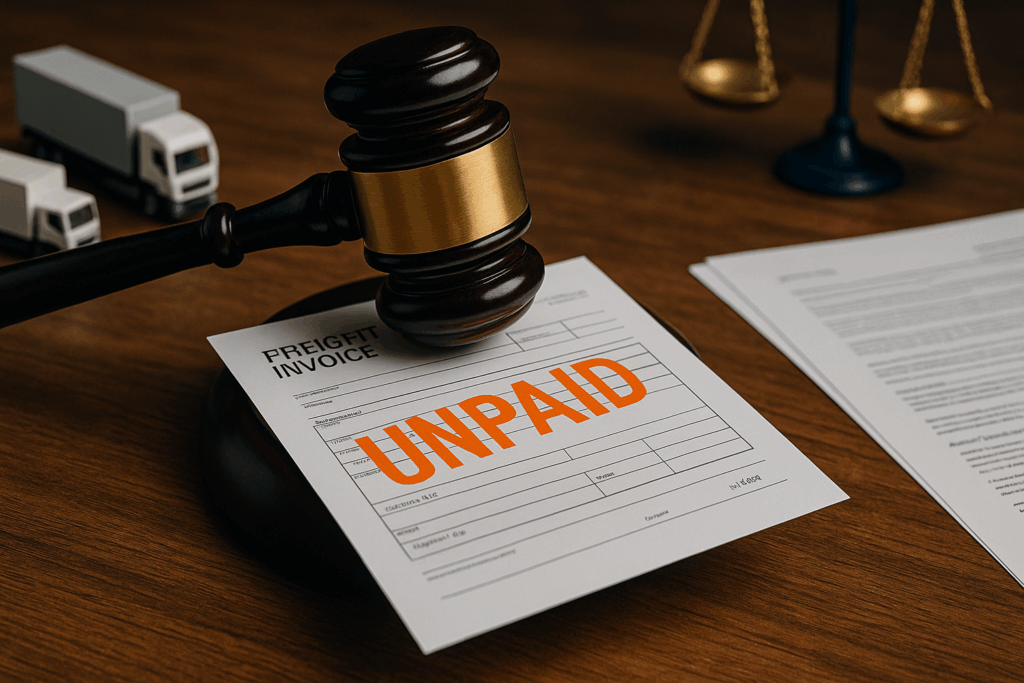
Unpaid freight invoices are one of the most common and damaging issues in the logistics industry. For carriers, they don’t just represent a cash flow disruption—they can threaten your ability to meet payroll, cover fuel costs, and keep trucks on the road. Fortunately, the law offers multiple legal pathways to help carriers recover overdue freight payments. Whether the problem is with a broker, shipper, or consignee, knowing your rights and your options is critical.
In this post, we’ll walk through the most effective legal steps you can take to collect on unpaid freight invoices, and how to prevent these disputes in the future.
Why Unpaid Freight Invoices Happen So Often
Unpaid freight invoices arise from a range of logistical, financial, and contractual issues. Sometimes, the shipper or broker simply doesn’t pay. Other times, payment is delayed due to disputes over delivery, cargo damage, or errors in documentation.
Here are the most common reasons freight invoices go unpaid:
- Broker insolvency: The broker goes out of business or files bankruptcy.
- Double brokering: Another broker is involved, causing payment confusion.
- Delivery disputes: The consignee refuses the shipment or raises claims.
- Missing paperwork: Without a bill of lading or proof of delivery, payment can be delayed or denied.
- Fraud: Bad actors in the supply chain disappear with cargo or funds.
Regardless of the reason, unpaid freight invoices are not just a nuisance—they’re a legal matter.
Step 1: Gather and Organize Documentation
The first step in resolving unpaid freight invoices is to gather every piece of documentation related to the transaction. This includes:
- Rate confirmation
- Bill of lading
- Signed proof of delivery (POD)
- Any written communication with the broker or shipper
- The original invoice with payment terms
Having these records ready will strengthen your case whether you’re filing a bond claim, sending a demand letter, or going to court. This step is essential for any carrier or freight payment dispute lawyer preparing for legal action.
Step 2: Contact the Broker or Shipper Directly
Many cases of unpaid freight invoices are the result of administrative errors or simple miscommunication. Before escalating the matter, reach out:
- Confirm the invoice was received.
- Request a written explanation if payment has been withheld.
- Follow up with a written reminder (email or certified mail) summarizing the issue and requesting prompt resolution.
Document all communication. If the debtor continues to avoid payment, escalate your legal efforts.
Step 3: Send a Formal Demand Letter
If outreach fails, a demand letter is your next move. A freight payment dispute lawyer can issue a formal demand that:
- States the exact amount owed
- Refers to the legal basis for payment (e.g., contract terms)
- Sets a firm deadline for payment
- Warns of legal consequences if payment isn’t received
Demand letters are often effective at prompting payment, especially when sent by legal counsel.
Step 4: File a Bond Claim Against the Broker
Freight brokers are required by federal law to maintain a $75,000 surety bond (BMC-84) or trust fund (BMC-85). If a broker fails to pay a carrier for services rendered, you can file a claim against this bond.
To file a bond claim:
- Look up the broker’s bond details in the FMCSA SAFER system.
- Submit a written claim to the surety company.
- Include documentation showing the amount owed, services rendered, and delivery proof.
Bond claims are time-sensitive—usually needing to be filed within 12 months of delivery—so act quickly. If successful, the surety company will pay your claim (up to the bond limit).
Step 5: File a Lawsuit for Breach of Contract
When all else fails, litigation becomes necessary. A freight dispute resolution attorney can help you file a lawsuit in small claims or civil court. You may be able to sue:
- The broker who failed to pay
- The shipper or consignee, if contract terms allow
- Any other party who contractually owes you
In these cases, courts typically rule in favor of the party who can show valid documentation and proof of delivery.
Who Is Legally Responsible for Unpaid Freight Invoices?
In a typical shipping agreement:
- The broker is contractually responsible for paying the carrier.
- If the broker disappears, the shipper might be liable—especially if there’s no clear “independent contractor” disclaimer.
- In some cases, the consignee can be pursued if they accepted delivery without paying.
A qualified freight payment dispute lawyer can help determine which party is legally liable and what course of action is most likely to result in successful recovery.
Legal Options if the Broker Files Bankruptcy
If the broker has filed for bankruptcy, your rights are more limited—but you may still recover payment. You can:
- File a claim in bankruptcy court
- File a bond claim with their surety provider
- Pursue the shipper or consignee if contract terms support it
Even in bankruptcy, some unpaid freight invoices are recoverable with proper legal guidance.
How to Prevent Freight Payment Disputes in the Future
 Vet Brokers Thoroughly
Before accepting loads from a new broker, check:
- FMCSA registration and bond status
- Industry reputation and reviews
- Their history of complaints or legal actions
 Use Written Contracts With Clear Payment Terms
Include:
- Payment deadlines (Net 15, Net 30)
- Late fees and interest clauses
- Clear legal jurisdiction in case of disputes
 Submit Complete, Timely Documentation
Many trucking payment dispute services are triggered by delays in paperwork. Always:
- Submit invoices promptly
- Include all required documents
- Confirm receipt of paperwork by the broker
 Work With a Freight Collection Partner
At Freight Collection Solutions, we offer dedicated freight dispute resolution and legal recovery services. If you’re owed money for completed deliveries, we’ll help you get paid—fast.
FAQs About Unpaid Freight Invoices
Can I legally hold the freight until I get paid?
No. Federal law prohibits withholding freight to force payment, even if invoices are overdue.
How long do I have to collect on an unpaid freight invoice?
You typically have 2–4 years to file a lawsuit, depending on your state. Bond claims must usually be filed within 12 months.
What if the shipper refuses to pay due to damage?
You can still pursue payment if you weren’t responsible for the damage. Your contract and cargo insurance will determine next steps.
How long does it take to get paid after filing a bond claim?
It varies, but most claims are resolved within 30–90 days—faster if your documentation is in order.
Don’t Let Unpaid Freight Invoices Derail Your Business
Unpaid freight invoices are not just frustrating—they can be financially devastating if left unresolved. Fortunately, you don’t have to navigate the legal process alone.
Freight Collection Solutions helps carriers like you take immediate legal action, file bond claims, send formal demands, and recover overdue invoices through court, mediation, or settlement.