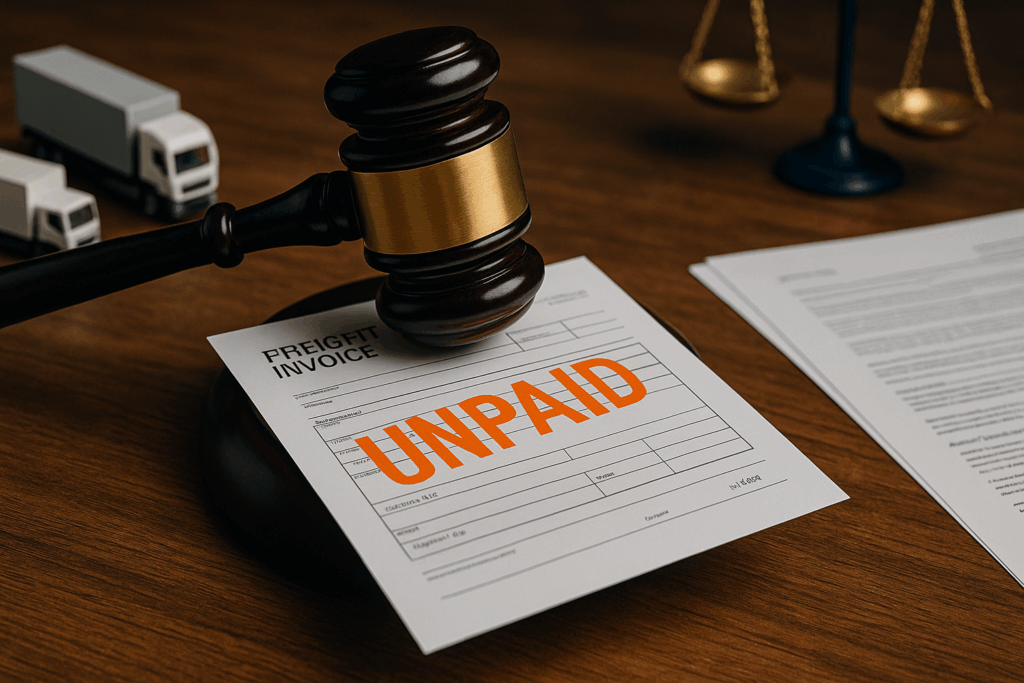
Legal Recourse for Trucking Companies Facing Non-Payment Issues
Non-payment is one of the most frustrating challenges in the freight industry. When your trucking company has delivered the load but the payment never arrives, you’re left dealing with financial strain, wasted time, and potential legal headaches. Knowing your legal recourse as a trucking company facing non-payment issues is essential to protect your rights and recover what you’re owed.
In this guide, we break down the best legal options for carriers dealing with unpaid freight invoices, how to prepare your case, and when to bring in a freight payment dispute lawyer to take formal action.
Why Trucking Companies Face Non-Payment Issues
Unfortunately, trucking company non-payment legal recourse is a frequent necessity due to:
- Broker fraud or insolvency
- Double brokering confusion
- Disputes over delivery, service, or delays
- Missing documentation like PODs
- Shippers claiming they already paid a broker
Regardless of the cause, if you fulfilled your end of the agreement, you are legally entitled to payment.
Step 1: Gather All Supporting Documentation
Before taking legal steps, compile every document related to the load:
- Rate confirmation
- Signed bill of lading
- Proof of delivery
- Final invoice
- Email communications or contract terms
Strong documentation is critical to enforce your legal recourse as a trucking company facing non-payment and ensures a faster resolution.
Step 2: Attempt Direct Contact and Follow-Up
Reach out to the broker or shipper via email and phone. Clearly state:
- The load details and date of delivery
- The amount owed
- Your request for immediate payment
Many unpaid freight invoices are resolved through firm but professional follow-up. If they continue to delay or ignore you, it’s time to escalate.
Step 3: Send a Formal Demand Letter
A freight payment dispute lawyer can help you issue a legally drafted demand letter, which:
- Lists the total amount due
- Cites the relevant contract terms
- Demands payment within a specific deadline
- Warns of litigation or bond claim if payment isn’t received
This letter is often enough to prompt resolution—especially when the debtor wants to avoid legal trouble.
Step 4: File a Claim Against the Broker’s Surety Bond
All licensed brokers must maintain a $75,000 freight broker surety bond. If your company is facing non-payment issues, this is one of the fastest legal remedies available.
How to File a Bond Claim:
- Look up the broker’s bond via the FMCSA SAFER database
- Contact the bond provider listed
- Submit all required documentation
- Cooperate with the investigation
This is a critical legal step in freight dispute resolution and may result in full or partial recovery—if the bond hasn’t already been exhausted.
Step 5: File a Lawsuit
If the bond is denied, disputed, or maxed out, your next legal recourse as a trucking company is filing a lawsuit in small claims or civil court.
Legal options include:
- Breach of contract claims for failure to pay
- Unjust enrichment claims against consignees or shippers
- Collection actions through liens, garnishment, or property seizure (after judgment)
Partnering with a freight payment dispute lawyer helps ensure your case is filed correctly and effectively represented.
Step 6: Pursue Payment from Other Liable Parties
If the broker has gone out of business or disappeared, your trucking company’s legal recourse may extend to:
- Shippers: If they paid a broker who failed to pass on payment
- Consignees: If they received the goods and the contract supports liability
- Third-party logistics providers (3PLs): If they were involved in arranging the shipment
A lawyer can help identify which parties are legally liable under the Uniform Commercial Code and transportation contract laws.
When to Bring in a Freight Payment Dispute Lawyer
Not every situation requires litigation—but if you’re facing:
- Multiple unpaid invoices
- A broker refusing to respond
- A denied bond claim
- A complex case with multiple parties
It’s time to work with a freight payment dispute lawyer. They can handle everything from demand letters to lawsuits, giving your trucking company the best chance of recovery.
Tips to Prevent Future Non-Payment Issues
After navigating the legal recourse process, take steps to avoid similar issues:
- Vet brokers thoroughly before accepting loads
- Use written contracts with clear payment terms and responsible parties
- Submit invoices promptly and track delivery confirmation
- Follow up professionally and document all communication
Avoiding future unpaid freight invoices starts with proactive systems and strong legal safeguards.
FAQs About Legal Recourse for Trucking Companies
How long do I have to sue for non-payment?
Most states allow 2–4 years to file a breach of contract lawsuit. Bond claims usually need to be filed within 12 months of the delivery date.
Can I still file a bond claim if the broker filed for bankruptcy?
Yes. The bond is separate from the broker’s assets and may still be available for recovery.
What if the shipper paid the broker, but I didn’t get paid?
You may still have legal recourse, especially if the broker acted as the shipper’s agent or there’s evidence of fraud.
Take Action Now—Don’t Wait to Recover What You’re Owed
When your trucking company faces non-payment issues, time is not on your side. The sooner you act, the greater your chances of recovering the money you’re owed. Bond claims have deadlines, and lawsuits require preparation.
At Freight Collection Solutions, we help trucking companies navigate every stage of freight dispute resolution. From sending demand letters to filing bond claims and taking legal action, we’re here to protect your cash flow and defend your business.
Contact Us Today for Immediate Assistance
If you’re facing unpaid freight invoices and need help getting paid, Freight Collection Solutions Law Group is here for you. Let us handle the legal details while you focus on your business.
For immediate assistance, contact us at 713-940-1886 or fill out the form.