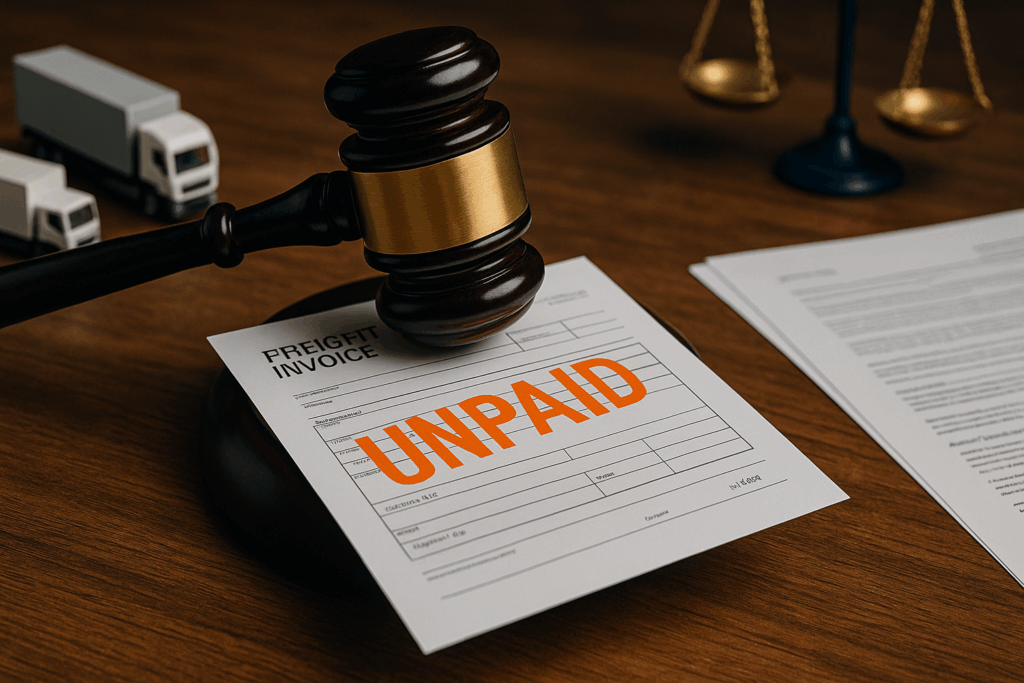
Delivering freight is only half the job—getting paid is the other half. But what happens when a broker or shipper refuses to pay, and your follow-ups go unanswered? In these cases, filing a freight claim for non-payment is often your first step toward legal recovery.
Whether you’re an independent carrier, a small trucking company, or a broker managing multiple loads, understanding the freight claims process can help you secure payment without wasting time or money.
In this guide, we break down how to file a freight claim for non-payment, what documentation you need, where to send your claim, and how this step fits into broader legal action or a potential freight non-payment lawsuit.
What Is a Freight Claim for Non-Payment?
A freight claim for non-payment is a formal demand for payment made by a carrier (or broker) against the party that owes them—usually the shipper, broker, or consignee.
Unlike damage or loss claims, non-payment claims focus strictly on the financial side of the transaction. You’re not alleging that the freight was mishandled—you’re asserting that you fulfilled your obligations and were not paid.
These claims can be submitted:
- To a broker’s surety bond provider (as required by FMCSA)
- Directly to the shipper or consignee in contractual arrangements
- Through a collections attorney, as a precursor to a freight non-payment lawsuit
When Should You File a Freight Non-Payment Claim?
You should file a freight claim for non-payment when:
- Payment is past due beyond the agreed-upon terms (typically 30 days)
- Your invoice has gone unanswered after multiple reminders
- The broker or shipper is avoiding communication
- You suspect fraud, double brokering, or insolvency
Don’t wait indefinitely. Most bond companies and courts require action within a specific time frame—often 12 to 18 months from the delivery date. Acting early preserves your legal rights.
Step-by-Step Guide: How to File a Freight Claim for Non-Payment
Step 1: Gather Your Documentation
Your claim is only as strong as the evidence you submit. Make sure you have:
- Rate confirmation or written agreement
- Invoice(s) showing the amount due and payment terms
- Bill of lading (BOL) with delivery details
- Proof of delivery (POD), preferably signed by the consignee
- Email or text communication confirming the transaction
If filing against a broker, you’ll also need:
- Broker’s MC or DOT number
- Surety bond provider’s contact info (available via FMCSA)
Step 2: Determine the Type of Claim
Depending on who owes the money, your options include:
- Bond claim against the broker’s surety company
- Direct claim against the shipper or consignee
- Legal demand letter from an attorney
- Filing a freight non-payment lawsuit
Step 3: Draft the Freight Claim Letter
Include the following in your claim letter:
- Your company’s name and contact info
- Broker/shipper/consignee name and address
- Load details (pickup/delivery dates, BOL number, reference ID)
- Total amount owed
- Attached documents (invoice, rate confirmation, POD)
- Statement that payment has not been received
- Your intent to pursue legal remedies if payment isn’t made within a specific time frame
Send the letter via certified mail or email with a read receipt.
Step 4: Submit to the Appropriate Party
- For bond claims, submit to the surety company directly using their claim form
- For shipper/consignee claims, send your demand letter to their billing/legal department
- If needed, escalate to your attorney to issue a formal legal demand
What Happens After Filing a Claim?
Broker Bond Claims
Surety companies are legally obligated to investigate and respond to your claim. They may:
- Request additional documentation
- Contact the broker for their side of the story
- Pay out your claim if the broker doesn’t dispute it or can’t provide proof of payment
Payouts are capped at $75,000 per broker bond, and multiple claims against the same broker may dilute what you receive.
Direct Claims Against Shippers
If the shipper acknowledges liability and wants to avoid a lawsuit, they may settle quickly—especially if your documentation is strong.
If the Claim Is Denied
You may still have legal recourse. This is where commercial litigation for trucking companies comes into play. Your attorney can help escalate the issue to court and pursue a formal freight non-payment lawsuit.
Common Reasons Freight Claims Are Denied
- Missing or unsigned delivery documents
- Conflicting freight terms on BOL vs. invoice
- Disputes over damage or delay
- Claims submitted after the statute of limitations
- Payment allegedly sent, but not received (especially if no proof was requested)
To reduce the risk of denial, double-check all documentation and keep detailed records of communications and attempted collections.
Legal Follow-Up: When a Lawsuit Becomes Necessary
If your freight claim is ignored, denied, or insufficiently paid, you may need to escalate the matter through the court system.
A freight non-payment lawsuit allows you to:
- Pursue the full balance owed
- Include interest, penalties, and attorney’s fees (if allowed by contract)
- Obtain a judgment that can be enforced via garnishment or lien
This strategy is especially effective when the shipper or broker has assets or is still operating.
Tips to Strengthen Your Claims Process
 Use Written Contracts
Even a simple email confirmation outlining terms can strengthen your claim.
Clarify Payment Terms on Every Load
Avoid vague agreements. State “Net 30” or specific deadlines.
Save Signed PODs
The signed delivery document is your best evidence of performance.
Know the Broker’s Bond Info Before Booking
If a problem arises, you’ll be ready to file a claim without delays.
Work With a Freight Collections Attorney
An attorney experienced in commercial litigation for trucking companies can improve your chances of success—and act fast when payment issues arise.
Frequently Asked Questions
Can I file a claim if I don’t have a written contract?
Yes—if you have a rate confirmation and supporting documentation. Verbal agreements may still be enforceable depending on your state.
Do I need a lawyer to file a freight claim?
Not always—but if the amount is large, the broker is combative, or legal escalation is likely, an attorney is highly recommended.
How long do I have to file a claim?
Most states and surety companies allow 12–18 months from the date of delivery. Act fast to avoid missing your window.
Conclusion: File the Claim. Protect Your Bottom Line.
Don’t let unpaid invoices slide into write-offs. Filing a freight claim for non-payment is a powerful step toward recovering what you’re owed—and asserting your rights as a carrier or broker.
With proper documentation and a strategic approach, you can often resolve disputes without litigation. But if legal action becomes necessary, you’ll be in a strong position to win.
At Freight Collection Solutions, we help trucking professionals recover unpaid freight charges quickly, professionally, and legally. Whether you’re filing a bond claim or preparing for court, our team is here to help.