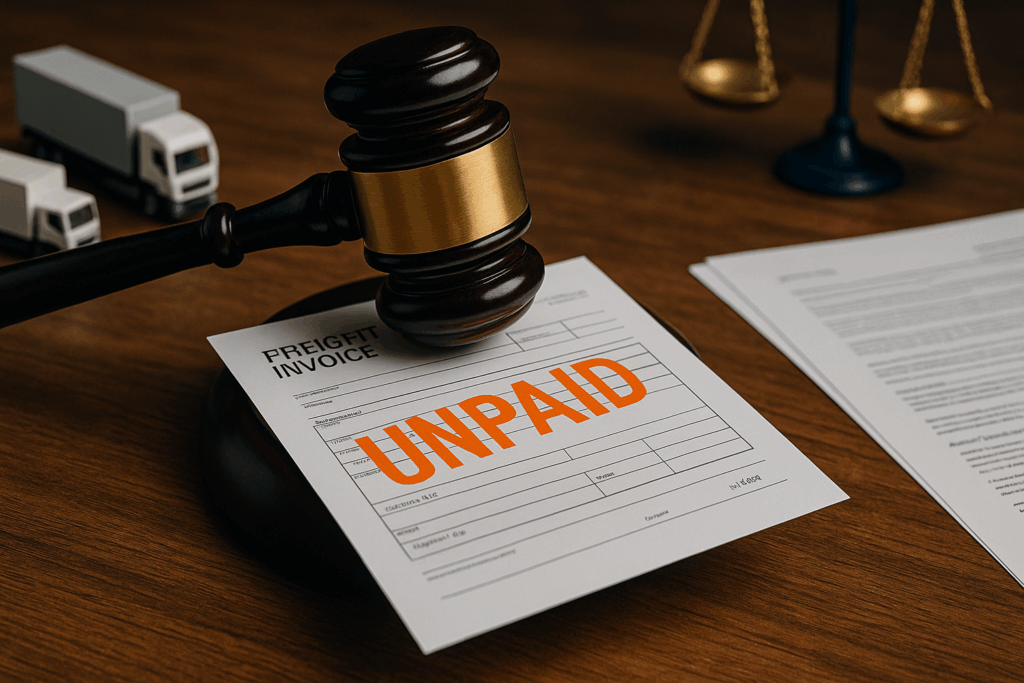
When a freight broker goes silent or refuses to pay, you may feel like your options are limited. But there’s one powerful recovery tool every motor carrier should understand: the freight broker surety bond.
Required by federal law, these bonds are designed to protect carriers from non-payment. Knowing how they work—and how to file a claim—can help you recover what you’re owed without resorting to litigation.
In this guide, we break down the role of surety bonds in freight contract enforcement and how to use them effectively when dealing with broker payment issues.
What Is a Freight Broker Surety Bond?
A freight broker surety bond is a $75,000 financial guarantee required by the FMCSA (Federal Motor Carrier Safety Administration). Every licensed broker must maintain an active bond (Form BMC-84) or a trust fund (BMC-85) to ensure carriers get paid—even if the broker defaults.
The bond is backed by a third-party surety company. If a broker fails to pay, the surety company may compensate the carrier—after reviewing and approving a valid claim.
How Surety Bonds Support Freight Contract Enforcement
While brokers can breach payment terms, freight contract enforcement doesn’t always mean going to court. Filing a claim against a broker’s bond is often faster and more accessible than litigation.
Benefits include:
- No attorney required (though recommended for larger claims)
- Recovery without court proceedings
- Protection for small and mid-sized carriers
- Leverage against dishonest or bankrupt brokers
When Should You File a Bond Claim?
You should consider filing a claim when:
- A broker refuses to pay a valid freight invoice
- The payment is more than 30 days overdue
- The broker is unresponsive or has gone out of business
- You’ve already sent a demand letter with no resolution
Time is critical. Claims must usually be filed within 12–18 months of the freight service date, depending on the bond provider.
How to Find the Broker’s Bond Information
You can locate a broker’s bond details through the FMCSA’s SAFER System or Licensing & Insurance search tool:
- Go to https://safer.fmcsa.dot.gov
- Enter the broker’s name or MC number
- Look under “Insurance” for the BMC-84 bond provider
Make sure the bond is still active and hasn’t been cancelled or revoked.
What You’ll Need to File a Bond Claim
To file a successful claim, you must submit:
- Proof of the agreement (rate confirmation or broker-carrier contract)
- Bills of Lading and signed PODs
- Unpaid invoices
- Communications showing payment attempts
- A detailed claim form provided by the surety company
Some companies may also request a notarized affidavit or W-9 form.
What Happens After You File the Claim?
Once submitted, the surety company will:
- Review your claim
- Request any missing documents
- Notify the broker and give them a chance to respond
- Approve or deny the claim (typically within 30–60 days)
If approved, you’ll receive payment—up to the bond’s available amount. Keep in mind that the bond is a shared pool, so other carriers may be drawing from it as well.
Realistic Scenario: Carrier Recovers $8,000 via Bond Claim
A Florida-based carrier hauled two loads for a broker who vanished before payment. After locating the broker’s BMC-84 bond through FMCSA, the carrier filed a claim with the surety company.
Within 45 days—and after submitting rate cons and BOLs—the surety company approved the claim and issued full payment. No lawsuit was needed.
Can You Still Sue After a Bond Claim?
Yes. If the bond doesn’t cover your full loss (e.g., the bond is depleted), you can still pursue legal action against the broker for the remaining balance. Many carriers file both a bond claim and a lawsuit as parallel strategies.
Why Work with a Freight Contract Enforcement Lawyer?
While you can file a bond claim yourself, an experienced freight contract enforcement attorney can:
- Draft a persuasive, legally sound demand letter
- Ensure your claim is documented properly
- Negotiate with the surety company on your behalf
- File additional recovery actions if the bond isn’t enough
This is especially valuable for high-dollar claims or complex cases involving multiple loads.
Conclusion: Surety Bonds Are a Carrier’s Safety Net
Freight broker surety bonds are your built-in backup plan when brokers fail to pay. They’re a key part of the legal and financial structure that protects carriers—and they often provide a faster path to payment than the courtroom.
If you’re dealing with a non-paying broker, don’t leave money on the table. Leverage the bond system and enforce your rights with confidence.
 Need Help Filing a Broker Bond Claim?
Freight Collection Solutions helps carriers navigate the surety bond process and recover unpaid freight invoices.