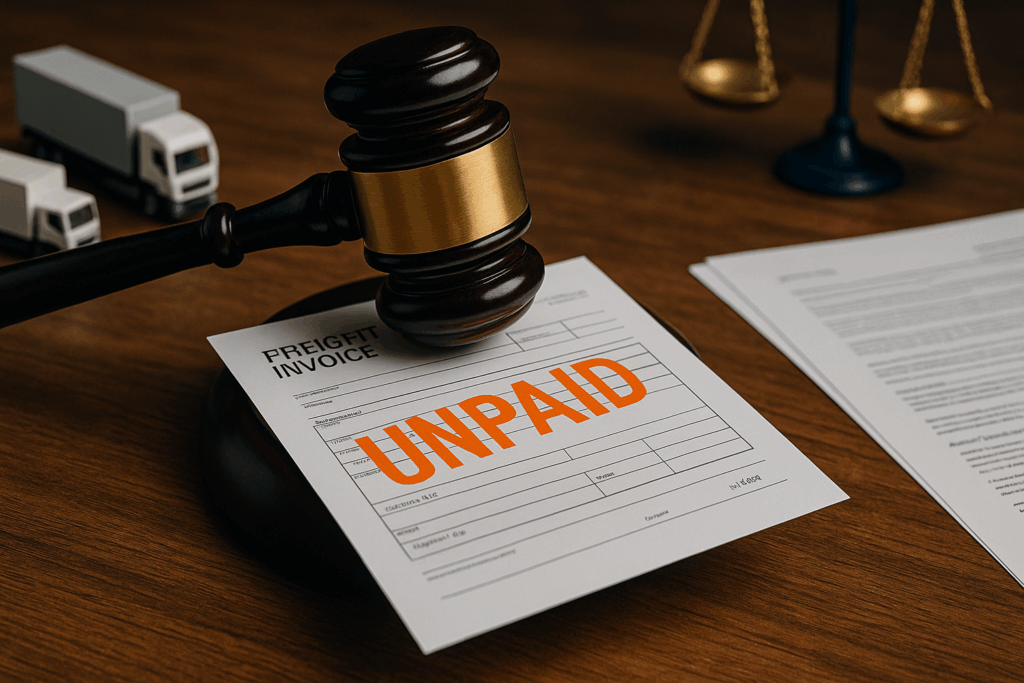
When a freight contract is breached—whether through non-payment, shipment delays, or failure to fulfill agreed terms—the financial fallout can be devastating. Unpaid invoices, lost loads, and damaged business relationships are just the beginning.
Fortunately, the law offers several powerful tools for freight contract enforcement. If you’ve suffered losses due to a breach, this guide outlines how to recover damages and get your business back on track.
What Counts as a Breach of Freight Contract?
A breach of freight agreement occurs when one party fails to meet the obligations outlined in the contract. Common examples include:
- Shipper refuses to pay after successful delivery
- Broker fails to tender promised loads
- Carrier delivers late or refuses service without cause
- Either party breaks a non-compete or exclusivity clause
In each case, the breach must be material (i.e., significant enough to impact the agreement) and documented clearly.
Types of Recoverable Losses in Freight Contract Disputes
When enforcing a freight contract, the injured party may be entitled to several types of damages, depending on the nature and extent of the breach.
1. Compensatory Damages
These aim to make you “whole” again by reimbursing direct losses, such as:
- Unpaid freight invoices
- Detention and layover charges
- Fuel and operating costs associated with the breached load
2. Consequential Damages
These cover indirect losses caused by the breach—often more difficult to claim, but possible with proper evidence. Examples include:
- Lost profits from missed loads or downtime
- Reputational damage if the breach affects client trust
- Penalties from third-party contracts triggered by the breach
3. Liquidated Damages
If your contract includes a clause stating a fixed amount payable in case of breach, those liquidated damages can be enforced—provided they’re reasonable and not punitive.
4. Attorney’s Fees and Interest
Some freight contracts allow the prevailing party to recover legal fees and interest on unpaid balances. Without such clauses, each party typically pays its own legal costs unless state law says otherwise.
How to Build a Strong Freight Contract Enforcement Case
To successfully recover trucking losses, you’ll need:
- A signed freight contract or rate confirmation
- Proof of performance (e.g., BOL, POD, delivery receipts)
- Communications with the breaching party
- Detailed accounting of losses
The more thorough your documentation, the more leverage you’ll have—whether pursuing settlement or filing suit.
Steps to Recover Losses After a Breach
Step 1: Send a Demand Letter
A demand letter—preferably drafted by a lawyer—puts the breaching party on notice and may prompt payment without litigation.
Step 2: Attempt Negotiation or Mediation
This informal resolution can save time and cost. If your contract includes a mediation clause, you’ll likely be required to attempt it before pursuing legal action.
Step 3: File a Lawsuit for Breach of Contract
If other methods fail, you can file a freight contract enforcement lawsuit. Depending on the case, this may be done in:
- Small claims court (for lower amounts)
- Civil court (for significant losses or complex disputes)
- Arbitration (if required by contract)
Step 4: Enforce the Judgment
If you win the case, the court may issue a judgment for the owed amount. You can then pursue collection through:
- Bank levies
- Asset seizure
- Liens on property
- Garnishment of broker or shipper revenue
Realistic Scenario: Broker Backs Out, Carrier Left With Empty Miles
A carrier signs a 3-month agreement with a freight broker for weekly loads. After just two weeks, the broker stops providing freight with no explanation. The carrier is left scrambling and loses $12,000 in expected revenue due to idle trucks and lost time.
The carrier consults a lawyer, sends a demand letter, and files a breach of contract claim. With strong documentation, they win in arbitration and recover compensatory damages plus legal costs.
When to Consult a Lawyer
A freight contract enforcement attorney helps you:
- Assess whether a breach occurred
- Estimate your recoverable losses
- Prepare a demand letter or settlement offer
- File a claim or lawsuit
- Represent you in negotiations, arbitration, or court
Legal support is especially important when large sums are involved or the breach affects multiple parties or clients.
Conclusion: You Can Recover Losses—If You Act Strategically
Don’t assume a freight contract breach means you have to absorb the losses. With strong documentation and the right legal support, you can recover trucking losses and hold the breaching party accountable.
Whether through negotiation, legal action, or contract-based remedies, freight contract enforcement gives you the tools to protect your bottom line and future operations.
 Need Legal Help Recovering Losses from a Broken Freight Agreement?
Freight Collection Solutions enforces freight contracts and helps carriers, brokers, and shippers recover damages after a breach.