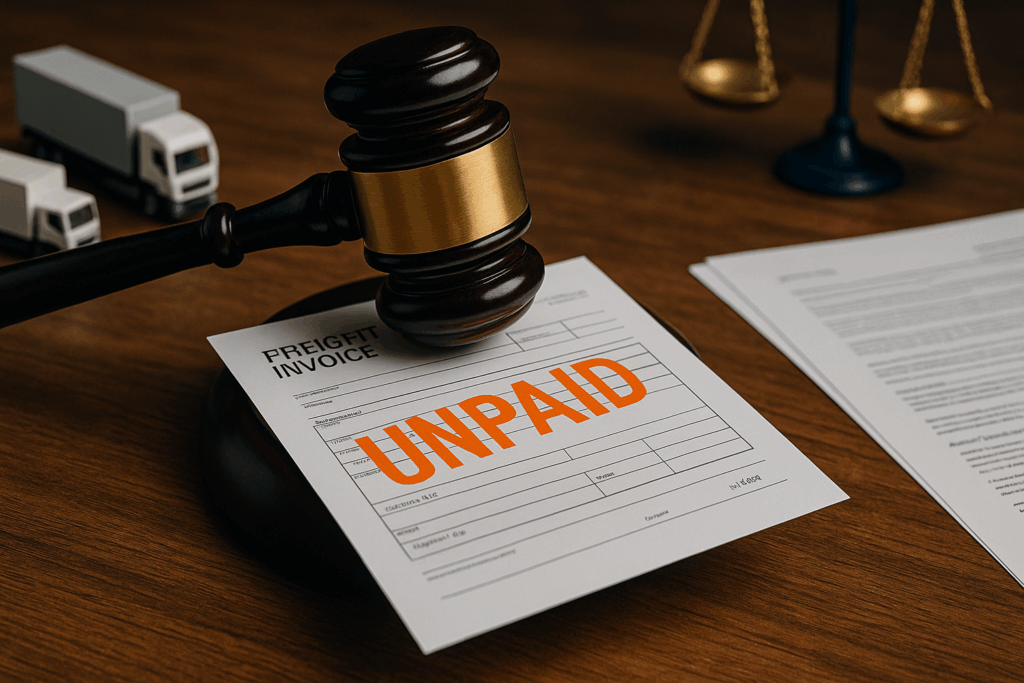
Sometimes, negotiations fail. Demand letters go unanswered. Brokers and shippers dig in or disappear. When all other options are exhausted, freight contract litigation may be your last—and most effective—path to getting paid.
But litigation can be complex and intimidating, especially if you’ve never been to court. This guide walks you through what to expect when pursuing a freight contract lawsuit and how to prepare your case for success.
When Is Freight Contract Litigation Necessary?
Litigation is typically the final step in freight contract enforcement. It’s necessary when:
- You’ve sent a demand letter and received no resolution
- Mediation or collections failed
- The breach involves substantial financial losses
- The other party is acting in bad faith or has disappeared
- There’s a pattern of non-payment or deception
At this stage, you’re not just recovering money—you’re also protecting your reputation and deterring further abuse.
Types of Freight Contract Disputes That Lead to Lawsuits
Common disputes that escalate into freight contract lawsuits include:
- Non-payment of freight invoices
- Violation of volume commitments or exclusivity terms
- Unauthorized reconsignment or delivery changes
- Double brokering without consent
- Damage to cargo followed by refusal to compensate
Each of these situations can result in real financial harm—and legal remedies may be available.
Step-by-Step Breakdown of the Freight Litigation Process
Step 1: Hire a Freight Contract Enforcement Attorney
This isn’t the time to go it alone. A lawyer experienced in transportation law will:
- Assess the strength of your case
- Advise on the best venue (state vs. federal court)
- Prepare filings and represent you throughout the case
Step 2: File a Complaint in the Proper Court
Your attorney will draft a complaint—a legal document outlining your claim, the breach, and your damages. This is filed with the court and served on the defendant (e.g., broker, shipper).
Jurisdiction depends on:
- The contract’s governing law clause
- Where the transaction occurred
- Where the defendant does business
Step 3: The Discovery Phase
Both sides exchange documents, records, and communications. You’ll need to provide:
- The freight contract or rate confirmations
- Bills of Lading (BOLs)
- Proof of delivery (PODs)
- Invoice records and communications
This phase often leads to settlements—especially if your evidence is strong.
Step 4: Settlement or Mediation (Optional but Common)
Many freight lawsuits settle before trial. If the other side realizes your case is solid, they may agree to pay—either in full or as part of a structured settlement.
Step 5: Trial and Judgment
If no agreement is reached, the case goes to trial. Your attorney will present the evidence and argue your case. If you win, the court issues a judgment stating how much the other party must pay.
How Long Does Freight Litigation Take?
It depends. Some cases resolve in weeks via settlement. Others take months or even over a year if they go to trial. Factors that affect the timeline include:
- Court backlog
- Willingness to settle
- Complexity of the dispute
- Location and contract jurisdiction
What Happens After You Win a Freight Contract Lawsuit?
Winning a case is great—but you still need to collect. Your options include:
- Garnishing bank accounts or receivables
- Placing liens on property
- Filing against a surety bond (if a broker is involved)
Your attorney will help enforce the judgment using available legal tools.
Realistic Scenario: Small Carrier Takes Broker to Court and Wins
A carrier delivered $18,000 in freight loads. Despite repeated follow-ups, the broker claimed “incomplete documentation” and refused to pay. After sending a demand letter with no result, the carrier hired an attorney.
They filed a freight contract lawsuit in the broker’s home state. During discovery, it became clear the broker had no valid defense. The case settled for the full amount plus attorney’s fees—avoiding trial.
Is It Worth It?
Litigation should be reserved for cases with:
- High dollar amounts
- Solid documentation
- No viable alternative
While it involves upfront time and cost, the return—full recovery, legal precedent, and deterrence—often justifies the effort.
Conclusion: Freight Contract Litigation Is a Powerful Last Resort
When diplomacy fails, freight contract enforcement through litigation can protect your business and recover what you’re owed. With a solid legal team, the right documentation, and clear strategy, you can win in court and enforce your rights.
Don’t be afraid to fight back when a contract is broken. The law is on your side—if you’re prepared.
 Thinking About Filing a Freight Contract Lawsuit?
Freight Collection Solutions helps carriers and brokers navigate freight contract litigation with confidence.