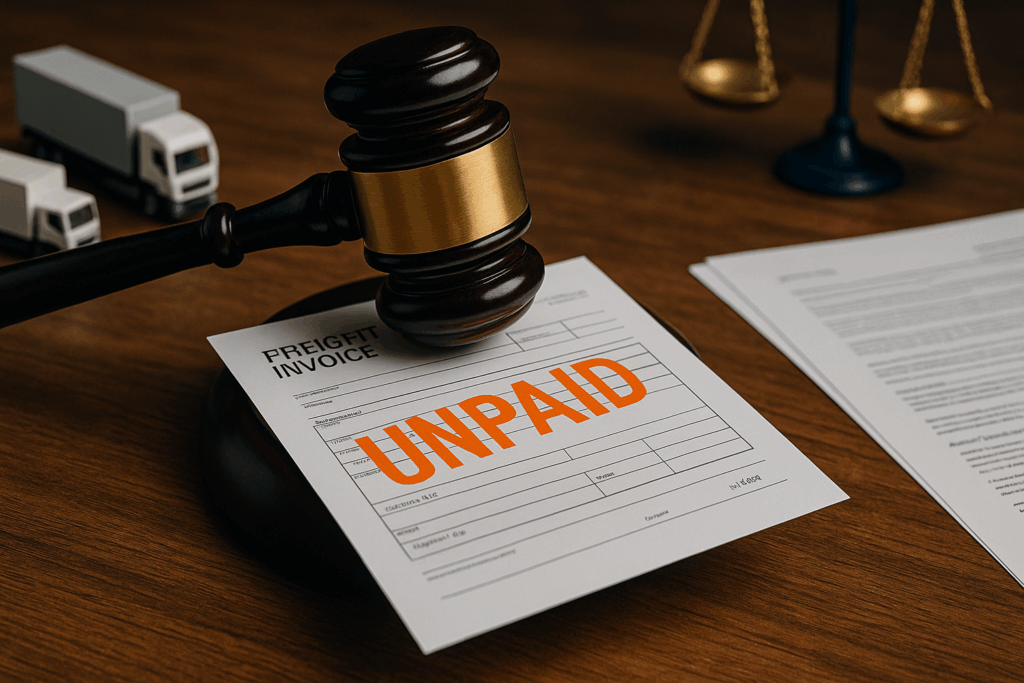
How to Sue for Unpaid Freight Invoices: A Legal Guide for Carriers
Unpaid freight invoices can cause major cash flow issues for carriers and owner-operators. You did the work. You delivered the load. But now you’re left chasing payment—with no results. If you’re in this situation, legal action may be the most effective path forward.
This guide will walk you through everything you need to know about how to sue for unpaid freight invoices: who you can sue, what documents you need, and how the legal process works. You’ll also learn about your rights, available legal remedies, and how to prevent future non-payment issues.
Understanding Freight Non-Payment Lawsuits
Freight non-payment lawsuits are most commonly based on breach of contract. When a broker or shipper hires a carrier to transport a load, that transaction forms a binding agreement—often formalized through a rate confirmation, bill of lading, and invoice.
If a carrier delivers the load but doesn’t get paid, they may sue for:
- Breach of contract
- Unjust enrichment (where someone benefits at your expense)
- Enforcement of a broker bond (for licensed freight brokers)
These cases typically fall under commercial litigation for trucking companies and can be handled in small claims court, state court, or federal court depending on the amount owed and the parties involved.
When to Consider Legal Action
Suing for unpaid freight invoices isn’t always the first move—but it’s often the right one when:
- The broker or shipper goes silent after repeated attempts to collect
- You’ve already sent a demand letter with no response
- The amount owed is significant or part of a pattern of non-payment
- You suspect fraud or double brokering
- The deadline for the statute of limitations is approaching (typically 4 years for written contracts)
Many carriers hesitate to sue because of time, cost, or uncertainty—but with the right attorney and documentation, commercial litigation for trucking can result in full or partial recovery.
Steps to Sue for Unpaid Freight Invoices
1. Review the Contract and Documentation
Look at all communications, rate confirmations, broker-carrier agreements, and the bill of lading. Make sure the terms are clear and show that payment was owed and not received.
2. Send a Final Demand Letter
Often, a professionally written demand letter from your attorney can prompt payment. It outlines your intention to pursue legal remedies if payment isn’t made by a certain deadline.
3. Identify the Correct Defendant
Depending on your case, the responsible party might be:
- A freight broker who booked the load
- A shipper who directly hired you
- A consignee, in rare cases where delivery implies financial responsibility
Your attorney will help determine who you can legally pursue and where.
4. File Your Lawsuit
Choose the appropriate venue:
- Small claims court for amounts typically under $10,000–$20,000
- State or federal court for larger or multi-jurisdictional disputes
You’ll file a complaint outlining the facts, breach, amount owed, and the damages you’re seeking.
What You Need to File a Strong Case
Winning a freight non-payment lawsuit depends on clear, consistent documentation. Key evidence includes:
- Rate confirmation: Proof of agreed payment
- Broker-carrier agreement: Terms and conditions
- Bill of lading: Proof of delivery and parties involved
- Invoice and payment terms: Clearly showing amounts owed
- Emails, texts, or call logs: Any communication confirming the transaction
- Proof of delivery (POD): Often the strongest evidence that the service was fulfilled
The stronger your paper trail, the easier it is to prove breach of contract and get a favorable judgment.
Legal Considerations and Your Options
Broker Bond Claims
Every freight broker is required by FMCSA to carry a $75,000 surety bond. If the broker fails to pay, you can file a claim with the bond company. This is often faster and less expensive than litigation, though it has limits if multiple carriers are filing against the same bond.
Jurisdiction and Venue
If the broker or shipper is in a different state, jurisdiction can get tricky. Most broker-carrier agreements contain a venue clause specifying where disputes must be resolved. If not, you may have options to sue in your home state, their home state, or where the load was delivered.
Collections and Judgment Enforcement
After winning your lawsuit, the court may award a judgment. But collecting that judgment is another battle:
- You may need to garnish the debtor’s bank account or wages
- File liens on business assets
- Engage a collections attorney with commercial litigation experience
Frequently Asked Questions
Can I sue both the broker and shipper?
Yes—if both played a role in non-payment. In some cases, dual liability may exist. A seasoned attorney can assess if joint action is viable.
What’s the statute of limitations to sue for unpaid freight invoices?
Most states follow a 4-year limit for written contracts. Some allow longer or shorter windows. Don’t delay—if you miss this window, you lose your right to sue.
What if the broker declared bankruptcy?
You may be able to file a proof of claim in the bankruptcy case. If the shipper or consignee is liable, they can still be pursued separately.
Can I file in small claims court without a lawyer?
In many states, yes. Small claims court is designed to be accessible, and filing fees are low. If the invoice amount is within the limit, this can be a fast, affordable option.
Preventing Freight Non-Payment in the Future
Even one unpaid load can disrupt your entire cash flow. Here’s how to protect yourself:
1. Verify Broker Credentials
Use the FMCSA database to confirm the broker’s authority and bond status. Avoid brokers with a history of non-payment.
2. Get Signed Rate Confirmations
A verbal agreement isn’t enough. Always get rate confirmations in writing, including payment terms and late fee clauses.
3. Use Load Boards with Carrier Protection
Some load boards offer payment protection or insurance against non-paying brokers. These platforms vet brokers more carefully.
4. Watch for Red Flags
If a broker offers a high rate for a last-minute load and requests unusual paperwork or routing, it could be double brokering—a growing scam in the industry.
5. Work With a Legal Partner
An attorney familiar with commercial litigation for trucking companies can review contracts before you sign and act fast when payment issues arise.
Conclusion: Don’t Let Non-Payment Derail Your Business
You shouldn’t have to chase down what you already earned. If you’re tired of excuses, ghosting, or empty promises, it’s time to take legal action. Knowing how to sue for unpaid freight invoices gives you the power to enforce your rights and protect your bottom line.
Whether you’re pursuing a freight non-payment lawsuit, filing a broker bond claim, or just need help deciding your next move, legal guidance can make all the difference.
Contact Us Today for Immediate Assistance
If you’re facing unpaid freight invoices and need help getting paid, Freight Collection Solutions Law Group is here for you. Let us handle the legal details while you focus on your business.
For immediate assistance, contact us at 713-940-1886 or fill out the form.