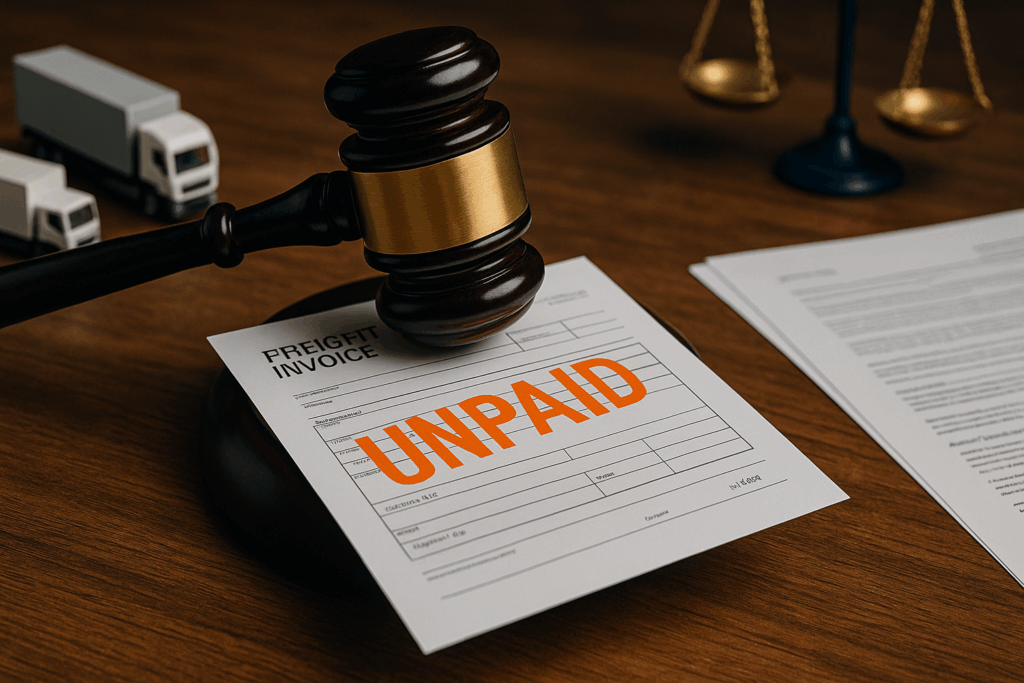
Freight carriers and shippers lose millions of dollars every year due to slow payments, invoice disputes, and uncollected freight charges. The good news? Many of these issues are avoidable. If your business is struggling to get paid on time, it may be due to a few common (and costly) missteps in your freight invoice collections process.
In this blog, we’ll break down the top 5 mistakes logistics companies make when collecting unpaid invoices—and show you how to fix them. Whether you’re running a small carrier or managing a national freight brokerage, avoiding these errors can dramatically improve your cash flow and reduce legal risk.
1. Failing to Use a Clear, Legally Binding Rate Confirmation
Freight invoice collections often fail because there’s no signed agreement to back up your claim. A handshake deal or vague email isn’t enough—especially if the case escalates to court.
How to Avoid It:
- Always use a signed rate confirmation or shipping contract that includes:
- Rate and payment terms
- Accessorial charges (e.g., detention, layover)
- Cancellation or delay policies
- Make sure both parties sign before dispatching the load
- Retain digital and hard copies for at least 3 years
Without proper documentation, you’re relying on goodwill instead of enforceable rights. That’s a losing strategy in today’s freight market.
2. Waiting Too Long to Act on Unpaid Freight Invoices
The longer you wait to act on unpaid freight bills, the harder it becomes to collect. After 90–120 days, the chances of full recovery drop sharply—especially if the broker goes out of business or files bankruptcy.
How to Avoid It:
- Set internal reminders at 30, 60, and 90 days past due
- At 45 days, escalate your outreach with a final demand letter
- After 60 days, consider contingency-based freight debt collection to recover what you’re owed without upfront legal fees
Time is not on your side in collections. Quick, consistent follow-up is essential to keeping cash flowing and reducing risk.
3. Overlooking Backup Documentation (PODs, Emails, BOLs)
Even with a rate confirmation, missing backup documents like the bill of lading (BOL) or proof of delivery (POD) can cripple your case. Debtors often dispute invoices based on alleged delivery failures or service issues—and without supporting records, your claims may be dismissed.
How to Avoid It:
- Keep organized records of:
- Rate confirmations
- Signed BOLs
- PODs with delivery signatures or timestamps
- Relevant email threads (e.g., dispatch confirmation or change requests)
- Use cloud-based storage or transportation management software to maintain easy access
Good documentation not only strengthens your legal case—it also helps resolve disputes faster and with fewer delays.
4. Not Using a Freight Audit Process Before Invoicing
If you’re billing based on incorrect mileage, weight, or accessorials, you open the door for disputes and non-payment. Worse, your internal team may not even realize the issue until it’s too late.
How to Avoid It:
- Conduct a freight audit before sending out any invoice
- Use automated tools or third-party audit services to verify:
- Load weights and dimensions
- Fuel surcharge rates
- Detention hours or layovers
- Delivery times and POD confirmation
- Standardize invoice formats across your team to prevent manual entry errors
Accurate invoicing reduces friction, builds trust, and speeds up payment timelines.
5. Ignoring the Power of Legal Leverage
Many freight companies waste time with endless phone calls and emails—hoping the customer will “do the right thing.” But when that fails, they have no escalation plan. This passive approach results in write-offs, weakened financials, and missed revenue opportunities.
How to Avoid It:
- Partner with a freight invoice contingency lawyer or collection agency that offers a “no recovery, no fee” model
- Use legal demand letters after 60–90 days past due
- If the debtor ignores communication, escalate quickly to small claims court or litigation
- Prioritize firms that specialize in transportation law—they’ll know how to interpret your shipping documents and contracts
Legal leverage doesn’t mean destroying relationships—it means defending your rights with experienced professionals who understand freight.
Bonus Tip: Don’t Wait Until It’s a Pattern
By the time unpaid invoices become a recurring issue, your business has likely already absorbed multiple hits. Instead of reacting to one-off problems, build a proactive system now:
- Require signed contracts before delivery
- Track invoices and aging reports weekly
- Train your team on collections protocol
- Establish relationships with contingency-based collection partners before you need them
Being prepared means fewer surprises—and fewer losses.
Why Contingency-Based Freight Collection Solves These Problems
A “no recovery, no fee” collection service works because it:
- Requires no upfront payment
- Only charges you if money is recovered
- Leverages legal tools and negotiation strategies to get faster results
- Aligns the collection firm’s incentives with your own
For many logistics companies, this model offers peace of mind and better success rates than traditional internal collections alone.
Frequently Asked Questions
 Can I use a collection service for invoices under $1,000?
Yes. Some firms accept small-dollar cases—especially if you have a high volume or recurring claims.
What percentage will I pay if they recover the funds?
Fees typically range from 25%–40% depending on the invoice amount, age of the debt, and whether litigation is required.
Is it better to hire a lawyer or a collection agency?
If your invoice involves complex freight contracts or legal terms, a freight invoice contingency lawyer is often more effective. For simpler cases, an agency may suffice.
What if I’ve already tried collecting for 6 months with no success?
It’s not too late. Collection firms can often succeed where internal efforts fail—especially when legal demand letters or court filings are needed.
Conclusion: Avoid Mistakes. Get Paid Faster.
Freight invoice collections don’t have to be a painful or risky process. By avoiding these five common mistakes and adopting a structured, proactive approach, you can protect your revenue and maintain healthier financials.
If your team is overwhelmed—or you’re ready to stop chasing unpaid invoices—it’s time to bring in a contingency-based freight collection expert.
 Recover Freight Invoices with No Upfront Fees
Let Freight Collection Solutions help you collect unpaid freight invoices on a contingency basis. We don’t get paid unless you do