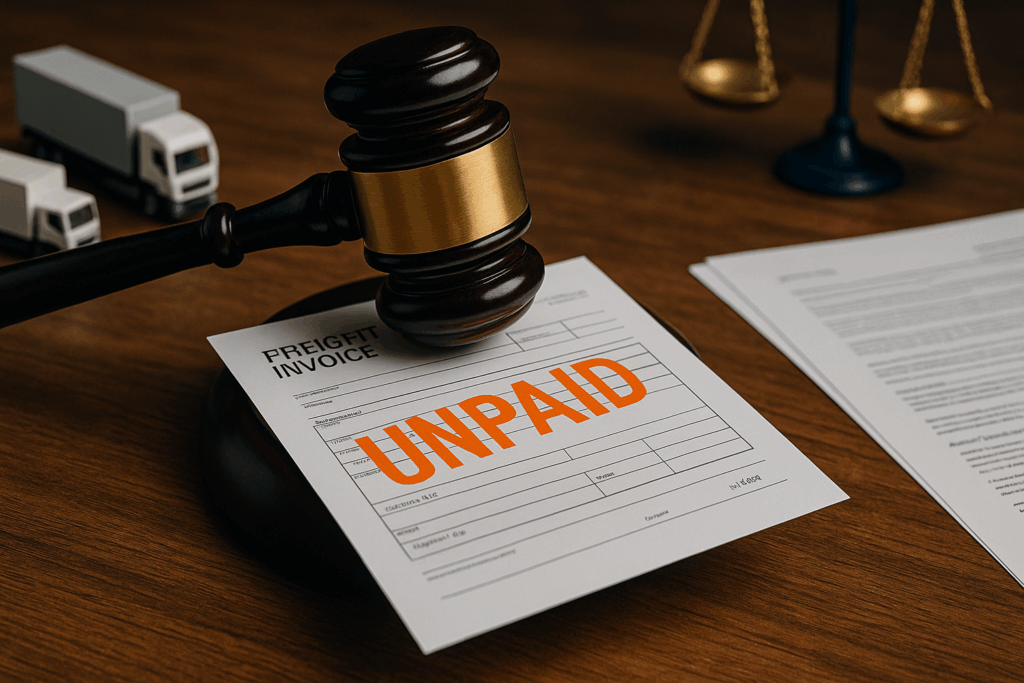
In freight and logistics, revenue isn’t truly yours until the invoice is paid—and all too often, that payment never comes. One of the most overlooked but powerful tools in ensuring full and timely payment is the freight audit. Done correctly, auditing your freight invoices can dramatically reduce errors, resolve disputes faster, and strengthen your position in freight debt recovery—especially when working with contingency-based legal teams.
This article explores how freight auditing works, how it supports debt collection, and how to use it to protect your profits.
What Is a Freight Audit?
A freight audit is a systematic review of transportation invoices to verify their accuracy against the agreed contract terms, delivery records, and rate confirmations. Audits are used to:
- Catch overcharges or incorrect billing
- Reconcile accessorial fees (e.g., detention, fuel surcharges)
- Ensure accurate billing codes
- Support internal budgeting and logistics cost analysis
But freight audits don’t just keep your books clean—they can play a vital role in freight debt collection, especially when invoice accuracy becomes a point of dispute.
Why Freight Audit Matters in Debt Collection
Errors or missing data in invoices are one of the most common reasons for freight billing disputes. Without proper auditing:
- Invoices may reflect incorrect rates or fees
- Documentation may be inconsistent or missing
- Clients may delay or deny payment, citing “inaccurate billing”
These issues can stall collections and complicate legal recovery efforts. A thorough freight audit process solves this by:
- Ensuring invoices are contractually sound
- Catching discrepancies before they go to the customer
- Providing solid documentation in case of a legal dispute
Key Elements of a Successful Freight Audit
An effective audit program includes the following components:
1. Rate Verification
Ensure that the rate on the invoice matches the signed rate confirmation. This includes:
- Linehaul rate
- Fuel surcharge
- Additional charges (e.g., liftgate, lumper, detention)
2. Service Verification
Cross-reference with:
- Bill of Lading (BOL)
- Proof of Delivery (POD)
- GPS or ELD tracking logs (for time-sensitive claims)
3. Accessorial Review
Accessorial fees are often where disputes arise. Verify:
- Approval of extra charges in writing
- Time logs for detention or layovers
- Documentation for lumper services or TONU fees
4. Consistency Across Systems
Ensure invoice data matches TMS (Transportation Management System) records, CRM notes, and customer communication logs.
Freight Audits and Contingency-Based Freight Debt Collection
If your invoice has already gone unpaid, a freight invoice contingency lawyer or collection firm will need accurate, audited records to proceed.
Here’s how auditing strengthens your legal recovery efforts:
- Faster Demand Letters: Audited documents reduce back-and-forth, enabling quicker legal action.
- Stronger Legal Claims: Clean records eliminate room for disputes over billing accuracy.
- Higher Collection Rates: Firms with solid audit documentation tend to recover more—faster.
Even if you’re using a no recovery, no fee freight collection service, providing a properly audited invoice can make or break your chances.
Real-Life Example
A freight brokerage submitted invoices to a customer totaling $17,500. After two months of silence, the customer claimed overcharges related to detention fees. Fortunately, the brokerage had a documented freight audit trail showing:
- Email approval for all detention charges
- Time-stamped GPS logs
- Signed PODs confirming delivery timelines
With help from a contingency freight debt collection firm, they sent a demand letter including the audit report. The debtor paid in full within 10 days—avoiding litigation.
Common Freight Audit Mistakes to Avoid
Even large logistics operations make these frequent audit mistakes:
- Auditing too late (e.g., after disputes begin)
- Not training staff to detect inconsistent accessorials
- Relying only on spreadsheets or manual reviews
- Failing to retain backup documents for 2–3 years
- Not auditing international invoices separately
Automated tools or third-party audit services can help streamline this process and prevent costly errors.
Freight Audit Best Practices
- Audit before sending the invoice—not after it’s overdue
- Create an internal checklist for each load
- Store all supporting documentation in a centralized system
- Train your billing team on freight terms, contract language, and legal implications
- Conduct monthly internal audits to catch patterns or systemic issues
FAQs About Freight Audits and Debt Collection
 Can I still send a disputed invoice to collections?
Yes—but your chances improve if the invoice has been properly audited and supported with documentation. A freight invoice contingency lawyer will use your audit records as evidence.
What software can I use for freight auditing?
TMS platforms like McLeod, DAT, or AscendTMS offer built-in auditing tools. You can also integrate third-party freight audit services or use manual verification processes with cloud storage.
Is it worth auditing invoices under $1,000?
Absolutely. Small errors add up—especially if you manage dozens or hundreds of invoices monthly. Plus, disputed small claims are harder to collect without a perfect paper trail.
Will a freight audit help if the customer is just ignoring the invoice?
Yes. Even if the customer isn’t disputing the invoice, your audit records give legal leverage to collect it through demand letters or court filings.
Don’t Let Errors Block Your Payments
Unpaid invoices hurt your bottom line—but when those invoices are inaccurate or unsupported, your legal options shrink. A thorough freight audit process ensures every charge you bill is defensible, documented, and enforceable.
And when clients delay or dispute payment, you’ll be ready to recover fast—with or without going to court.
 Ready to Collect Unpaid Invoices with Confidence?
Freight Collection Solutions helps logistics companies recover unpaid invoices using contingency-based legal services—and we love clients who come prepared. If you’ve done your audit but still haven’t been paid, we’re ready to help.