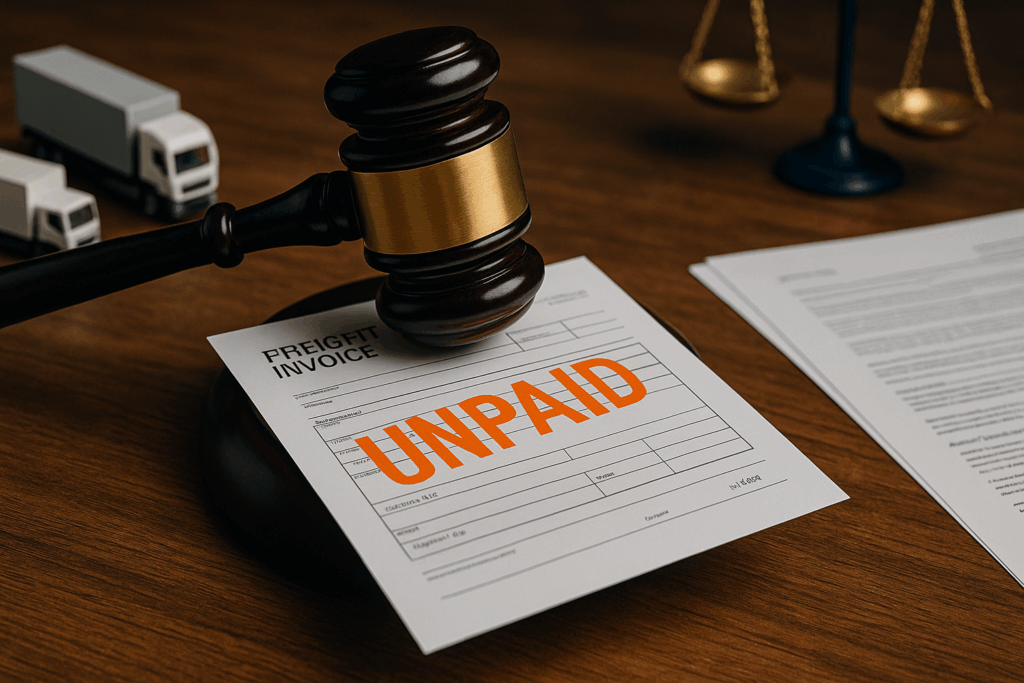
Factoring agreements are designed to bring stability to trucking operations, helping carriers bridge the gap between delivery and payment. But when a defaulted factoring agreement leads to frozen reserves, reversed payments, or withheld invoices, the relationship quickly turns from supportive to destructive. If your funds are being held hostage, this guide will walk you through the legal and practical steps for recovering funds from factoring companies.
What Is a Defaulted Factoring Agreement?
A default in a factoring agreement occurs when either party violates the terms of the contract. Common examples include:
- A carrier fails to submit required documentation on time
- A customer disputes a factored invoice
- A factoring company withholds reserves beyond contract limits
- One party terminates the agreement improperly or prematurely
Whether intentional or not, defaults can trigger aggressive legal and financial consequences—especially when the factoring company uses them to justify withholding large sums.
Step-by-Step: Recovering Funds from Factoring
Step 1: Identify the Type of Default
Determine who is being accused of default and on what basis:
- Carrier Default: Late paperwork, invoice disputes, customer nonpayment
- Factor Default: Holding funds beyond reserve terms, violating UCC rules, breaching contract provisions
Understanding the default cause will dictate your legal position and recovery options.
Step 2: Review Your Factoring Agreement
Key contract sections to examine include:
- Default definitions and triggers
- Remedies available to each party
- Reserve release timelines
- Chargeback policies
- Termination and dispute resolution clauses
If the factoring company is acting outside of the written terms—especially regarding payment or reserves—you likely have a case for fund recovery.
Step 3: Calculate the Amount Owed
Create a detailed breakdown of:
- All unpaid or withheld invoices
- Held reserve balances
- Chargebacks that may be disputed
- Penalties or fees assessed during the dispute
This gives your legal team a clear claim amount to pursue in a demand letter or court filing.
Legal Options for Freight Fund Recovery
1. Demand Letter
A formal demand letter from your attorney outlines the amount owed, the reason you’re entitled to the funds, and a deadline for voluntary payment. In many cases, this is enough to trigger negotiation or payment.
2. Mediation or Arbitration
If your contract includes an alternative dispute resolution clause, you may be required to attempt mediation or arbitration before suing. These methods are faster and cheaper than litigation but require legal preparation and evidence.
3. Litigation
If the factoring company refuses to release funds or has clearly breached the agreement, filing a lawsuit may be your best option. Common legal claims include:
- Breach of contract
- Unjust enrichment
- Conversion (wrongful withholding of funds)
- Fraud or bad faith dealing
Your attorney may also request injunctive relief to prevent the factor from continuing harmful practices during litigation.
Real-World Example: Carrier Wins Reserve Dispute
A 12-truck carrier had over $90,000 in reserves withheld after terminating their factoring contract. The factor cited “unresolved account balances” without explanation. The carrier’s legal team reviewed the contract, filed a demand letter, and initiated arbitration. The factor was ordered to return $78,000 and pay partial attorney fees for violating the reserve release clause.
Preventing Future Factoring Defaults
Know the Red Flags
Common signs of an upcoming default or withholding dispute include:
- Unexplained reserve deductions
- Increased chargebacks with no documentation
- Delayed customer payments without updates
- Difficulty reaching your account rep
Negotiate Better Contract Terms
Avoid default traps by ensuring:
- Clear reserve release schedules
- Reasonable documentation deadlines
- Fair chargeback triggers
- Defined resolution pathways (mediation/litigation/arbitration)
Have a transportation attorney review every agreement before you sign it.
Protect Your Rights During and After Termination
If you’ve terminated your agreement or are in the process:
- Submit final documentation promptly
- Request reserve audits and accounting in writing
- Keep communication documented and professional
- Watch for UCC liens that may block future factoring or financing
Even after the contract ends, factoring companies sometimes try to maintain leverage through funds, legal threats, or credit reporting.
Conclusion: You Don’t Have to Walk Away From What You’re Owed
A defaulted factoring agreement doesn’t give the factoring company a blank check to keep your money. With careful contract review, documented communication, and the right legal strategy, recovering funds from factoring is not only possible—it’s your right. Don’t let vague policies or industry jargon stop you from protecting your business.
 Need Help Recovering Funds From a Factoring Company?
Freight Collection Solutions helps trucking companies enforce contract rights and recover withheld reserves, unpaid invoices, and wrongfully charged fees. If your factoring company won’t pay what they owe, we’re ready to fight back.