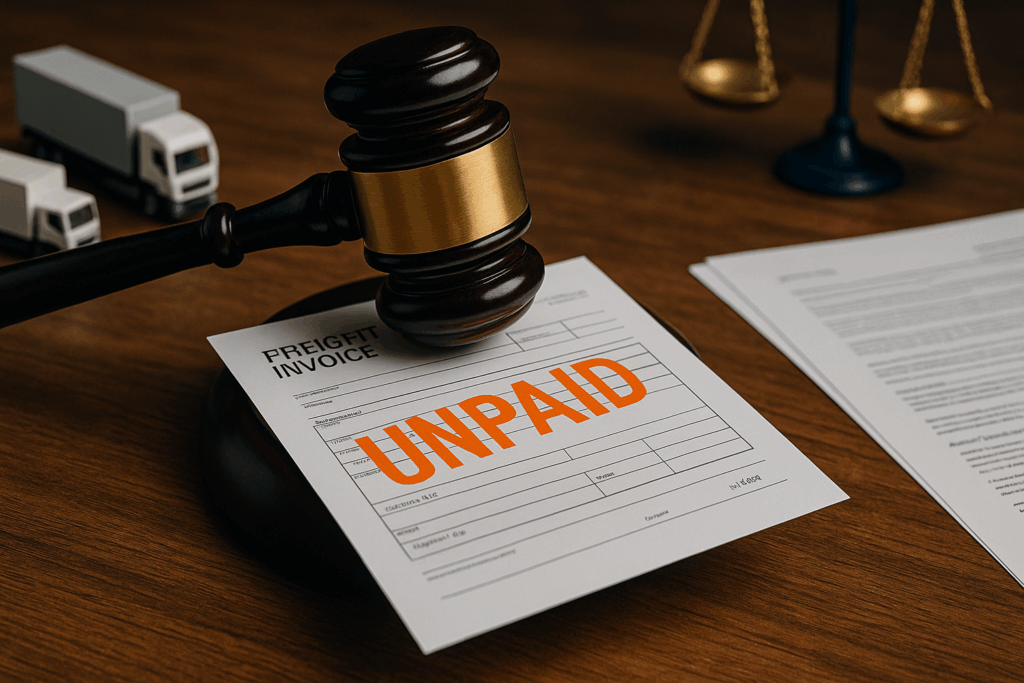
In the transportation industry, unpaid freight invoices are often the result of preventable mistakes—like accepting loads from unreliable brokers or financially unstable shippers. While recovery options exist, avoiding the problem entirely is always the better path.
This guide walks you through exactly how to vet freight brokers and shippers before accepting a load, so you minimize the risk of non-payment and protect your bottom line.
Why Vetting Matters: Avoiding Unpaid Invoices Before They Happen
Transportation debt collection often starts with a single oversight: trusting the wrong party with your freight. Once a broker disappears or disputes your invoice, recovery becomes complex, time-consuming, and costly.
By taking a few simple vetting steps up front, carriers and owner-operators can reduce exposure to:
- Brokers operating without valid bonds
- Shippers with poor payment histories
- Entities with multiple legal disputes or bankruptcy filings
- New companies created to avoid past liabilities
Prevention is always less expensive than litigation.
Step 1: Use the FMCSA SAFER System to Check Broker Status
Start by looking up the broker’s Motor Carrier (MC) number on the FMCSA SAFER system:
 https://safer.fmcsa.dot.gov/CompanySnapshot.aspx
Key items to confirm:
- Operating Status: Should say “Active”
- Bond Amount: Must show a valid $75,000 surety bond
- Insurance Information: Verify it’s up to date
- Company History: Look for frequent name changes or MC reissuance
If the MC number is inactive, revoked, or recently reinstated, treat it as a red flag.
Step 2: Search for Complaints and Reviews
Even if the broker is FMCSA-compliant, they may still have a bad payment track record. Research them using third-party review databases like:
- Carrier411 (membership required)
- FreightGuard Reports (via DAT)
- FreightCheckers.com
- Reddit forums or trucking Facebook groups
Look for complaints about:
- Non-payment or late payment
- Rate discrepancies
- Poor communication or ghosting after delivery
No reviews? That’s not always a good thing—it could indicate a new or fly-by-night operation.
Step 3: Pull a Transportation Credit Report
Many carriers skip this step, but it’s one of the most powerful tools you have.
Use services like:
- Ansonia Credit Data
- TransCredit
- Dun & Bradstreet
These reports show:
- Payment history with other carriers
- Credit limits and outstanding debt
- Days-to-pay averages
- Legal filings and UCC liens
A company that regularly pays 60+ days late or has multiple collection actions should not be trusted with your freight.
Step 4: Get Everything in Writing Before You Roll
Verbal agreements are common—but they don’t hold up in court.
Before accepting the load, confirm:
- Rate confirmation signed by both parties
- Payment terms clearly stated (e.g., Net 30, Net 15)
- Penalties for late payment or collections
- Fuel surcharge, accessorials, or detention rates in writing
Include language that allows you to recover collection or attorney’s fees in the event of non-payment.
Step 5: Ask for a Payment Guarantee or Reference
If you’re working with a new broker or direct shipper, request:
- At least two references from other carriers who were paid on time
- Written payment guarantee (if they’re new or have no reviews)
A reputable company won’t hesitate to back up their credibility—especially if they want access to your equipment.
Step 6: Watch for Common Red Flags
When vetting freight brokers, be cautious if you notice:
 “Too good to be true” rates, especially on short notice
New MC number with no reviews or credit data
Reluctance to sign your carrier agreement or confirm terms in writing
No verified office address or phone number
Pressure to move quickly without paperwork
One red flag might just be inexperience. Multiple red flags? Walk away.
Real-Life Example: Preventing a $12,000 Loss with One Lookup
A Midwest carrier was offered a last-minute reefer load paying 30% above market. The broker promised fast pay and didn’t request much documentation.
Before accepting, the dispatcher ran a SAFER lookup—only to find that the MC number had been revoked a week prior. A quick check on Carrier411 revealed multiple unpaid load complaints.
By spending five minutes vetting the broker, the carrier avoided losing $12,000 and a week of driving time.
Frequently Asked Questions
How do I verify a broker’s MC number?
Use the FMCSA SAFER system to search by company name or MC number. Confirm that their operating status is “Active” and their surety bond is valid.
What’s the best way to check a broker’s payment reputation?
Use credit services like Ansonia or TransCredit, or check reputation platforms like Carrier411 or FreightCheckers. Look for patterns of slow or missed payments.
Can I recover attorney’s fees if I sue a broker?
Only if your rate confirmation or agreement includes that provision. Always add a clause allowing legal fee recovery when possible.
Final Thoughts: Be Proactive, Not Reactive
Freight debt recovery is always harder than freight debt prevention. If you vet every broker or shipper before accepting a load, you’ll avoid the vast majority of payment issues.
Make broker screening part of your standard operating procedure—not just a “gut check” when something feels off.
 Need Help with Freight Debt Recovery?
At Freight Collection Solutions, we help transportation professionals recover what they’re owed—and prevent it from happening again. If you’ve already accepted a load from a broker who isn’t paying, we can help you take the next step.