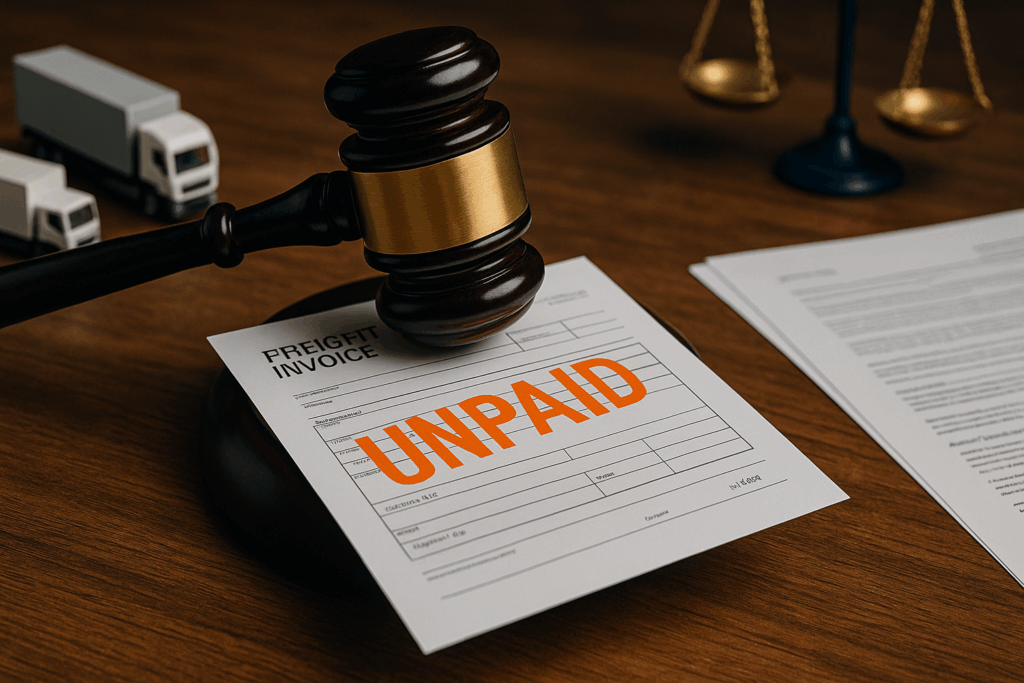
When a broker or shipper refuses to pay your invoice, legal action may feel like the only option left. But is going to court worth it? And if so, should you file your case in small claims court?
This guide explains everything you need to know about using small claims court for freight collection, including when it makes sense, what to expect, and how to maximize your chances of getting paid—without spending thousands on legal fees.
When Small Claims Court Makes Sense for Freight Collection
Small claims court is designed for individuals and businesses seeking to recover relatively small sums of money—usually without needing a lawyer.
It’s worth considering if:
- The amount owed is within your state’s small claims limit
- You’ve already attempted to collect payment without success
- The broker or shipper is ignoring demand letters
- You want a cost-effective legal option without hiring an attorney
 Typical small claims limits:
- Texas: $20,000
- California: $10,000
- New York: $5,000
- Florida: $8,000
(Check your local court’s website for the most current limit.)
Benefits of Small Claims Court for Freight Invoices
 Low cost – Filing fees are often under $100
No lawyer needed – You can represent yourself
Faster resolution – Most cases are resolved within 1–2 months
Leverage – A court judgment can pressure the debtor into paying
Many brokers and shippers pay as soon as they receive the court summons—because now the claim is official, and ignoring it can lead to a judgment.
Step-by-Step: Filing a Freight Invoice Lawsuit in Small Claims Court
Step 1: Verify the Defendant’s Location
File in the jurisdiction where the broker or shipper does business or where the contract was executed. You’ll need a physical address—not just a PO box or DOT number.
Step 2: Gather Documentation
Courts need clear evidence. Collect:
- Bill of Lading (BOL)
- Proof of Delivery (POD)
- Signed rate confirmation
- Invoice and payment terms
- Email/text records of follow-up attempts
- Any previous demand letter
Make multiple copies of everything.
Step 3: File Your Claim
Visit your county’s small claims court or file online (if available). You’ll complete:
- Plaintiff and defendant info
- Basis of your claim
- Amount owed
- Supporting documents (some courts allow uploads)
Pay the filing fee. Fee waivers may be available for small carriers or individuals.
Step 4: Serve the Defendant
The broker or shipper must be formally served with notice of the lawsuit. This can be done by:
- Sheriff’s office
- Process server
- Certified mail (in some jurisdictions)
Include all documents and the court date. Keep proof of service.
Step 5: Prepare for the Hearing
Bring your:
- Timeline of events
- Documentation binder
- Summary of damages and attempts to collect
- Witness statements (if any)
Judges appreciate concise, organized presentations. No need for legalese—just facts and evidence.
Step 6: Get a Judgment
If the defendant doesn’t appear, you may win by default. If they do appear, the judge will hear both sides and issue a ruling—often that same day.
If you win, the court enters a judgment ordering the broker/shipper to pay the amount owed.
What Happens After You Win?
Winning in court doesn’t guarantee payment. You’ll need to enforce the judgment, which may include:
- Bank account garnishment
- Property liens
- Credit reporting
- Wage garnishment (for individual shippers)
Some states allow post-judgment discovery to locate debtor assets. If you’re unsure how to collect, a transportation debt collection attorney can help enforce the court order.
Real-World Scenario: Small Claims Court Pays Off
A solo flatbed owner-operator in Georgia was owed $6,400 by a freight broker who went silent after delivery. After weeks of unanswered emails, the carrier filed a small claims case in the broker’s home county.
The broker ignored the summons and failed to appear in court. The judge issued a default judgment. Two weeks later, the carrier sent a copy of the judgment to the broker’s bond provider and initiated collection through the sheriff’s office.
The broker wired the full amount plus court costs within 14 days.
Common Questions About Freight Collection in Small Claims Court
Can I file in my own state if the broker is located elsewhere?
Generally, no. You must file where the defendant does business or where the transaction occurred. Out-of-state defendants may require filing in their jurisdiction.
What if the broker doesn’t show up to court?
You may win by default. However, you still must serve them properly beforehand to ensure the court has jurisdiction.
Can I recover my filing fees?
Yes—most courts allow you to include filing fees and process server costs in your claim.
Is it worth pursuing debts under $5,000?
Yes, especially if you have solid documentation and the debtor is still operating. Even small amounts can add up—and judgments stay enforceable for several years (depending on your state).
When Small Claims Court Isn’t the Best Option
While small claims court works in many cases, it might not be ideal if:
- The amount owed exceeds the jurisdiction limit
- The broker is out-of-state or hard to locate
- You anticipate legal defenses or fraud claims
- You prefer to use a collections attorney or file a bond claim instead
In those cases, a transportation debt collection professional can help you assess stronger legal tools like formal litigation or surety bond enforcement.
Final Thoughts: Small Claims Court is a Valuable Tool—When Used Strategically
For many carriers, especially smaller fleets and owner-operators, small claims court provides an affordable, fast path to recover unpaid freight invoices. While it doesn’t guarantee immediate payment, it creates legal pressure—and a judgment that can be enforced.
Just remember: strong documentation and proper procedure are key.
 Need Help With Freight Collections or Legal Strategy?
At Freight Collection Solutions, we support carriers with everything from pre-collection strategies to full-scale legal enforcement—including judgment recovery after small claims victories.