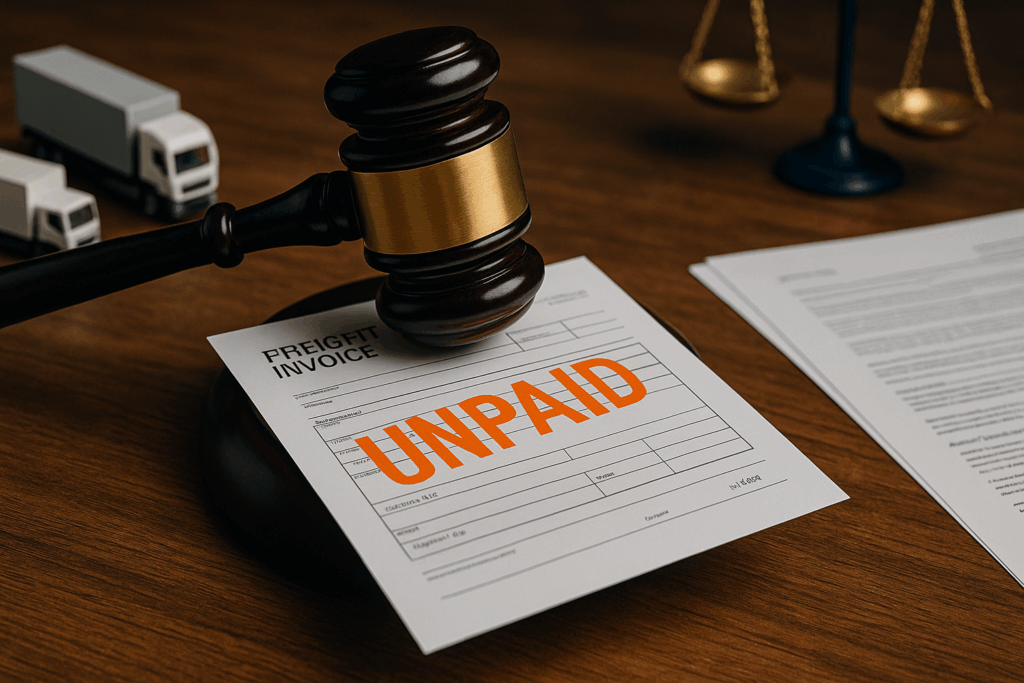
How to Recover Freight Payments After Broker Insolvency
When a freight broker goes out of business or files for bankruptcy, the impact on carriers and freight companies can be severe. You delivered the load, fulfilled your end of the contract—and now the payment is nowhere in sight. What are your options?
Broker insolvency collection is a growing legal concern in the freight and transportation industry, especially as market pressures cause more brokers to default on payments. If you’re a carrier or logistics company left holding the bag, there are still ways to pursue compensation. This guide breaks down your legal remedies, from bond claims to court action, so you can recover what you’re owed.
What Is Broker Insolvency—and Why Does It Happen?
Broker insolvency occurs when a freight broker is unable to meet their financial obligations, including payments to carriers. This often stems from cash flow mismanagement, high debt, or broader industry downturns.
Unlike shippers, brokers don’t own the freight. They serve as middlemen, coordinating transportation between shippers and carriers. When they go under, it’s often the carriers—who have already delivered the freight—who are left chasing unpaid invoices.
A common sign of an impending insolvency is delayed payments. If a broker consistently misses payment deadlines, communicates vaguely about delays, or suddenly goes quiet, it may be time to prepare for recovery action.
Step 1: File a Freight Broker Bond Claim
Every freight broker in the U.S. must carry a surety bond—most commonly a BMC-84 bond—as a requirement of their FMCSA (Federal Motor Carrier Safety Administration) license. The minimum bond amount is $75,000, and it’s meant to protect carriers in exactly these situations.
How to Start the Freight Broker Bond Claim Process
- Identify the Surety Company
Search the FMCSA database for the broker’s active bond and insurer information. - Gather Documentation
Collect the bill of lading, delivery proof, rate confirmation, and your unpaid invoice. - Submit a Formal Claim
Contact the surety company directly to submit your documentation and initiate the claim. Some companies have online portals; others require mail or email submissions. - Wait for Investigation
The surety company will review the claim, verify the broker’s default, and determine if the claim is valid. This process typically takes 30–60 days.
Limitations of the Bond Claim Process
- Cap on Recovery: If multiple carriers file claims, the $75,000 may be divided among them.
- Time Limits: You must file within a specified timeframe—usually within 12–18 months of the default.
- Partial Payouts: The surety company may only cover a portion of your invoice if other claims are prioritized or if documentation is lacking.
Still, a freight broker bond claim is often the fastest and most straightforward first step in the broker insolvency collection process.
Step 2: Consider Legal Remedies Beyond the Bond
If the bond is exhausted or doesn’t cover your full loss, you may have to escalate the matter legally.
Small Claims or Civil Court
For amounts under your state’s small claims threshold (typically $5,000–$10,000), you can file a lawsuit without hiring an attorney. For larger amounts, a transportation collections attorney can help you recover the full debt through civil court.
Bankruptcy Proceedings
If the broker has filed for bankruptcy, you’ll need to file a proof of claim with the bankruptcy court. While payment is never guaranteed, certain debts—especially those involving freight already delivered—may receive priority treatment.
Tips for Bankruptcy Recovery:
- Submit your claim promptly (usually within 90 days of notice).
- Include supporting contracts and documentation.
- Monitor the docket for updates, objections, and payout schedules.
Third-Party Collections
Working with a law firm that specializes in broker insolvency collection can streamline your recovery. Legal teams can pursue:
- Personal liability claims (if applicable)
- Prejudgment liens or writs
- Settlement negotiations outside of court
Some firms work on contingency or hybrid fee arrangements, so you don’t pay upfront.
Realistic Recovery Scenarios
Let’s say you hauled $12,000 worth of freight for a broker who suddenly closed their doors. You file a bond claim and recover $3,500, as the bond was shared with several other carriers. A collections attorney files a demand letter and discovers the broker transferred assets to a personal account days before default. With proper legal action, you may recover an additional $6,000 through a settlement.
These scenarios illustrate the importance of acting quickly, documenting your losses, and using multiple strategies to recover the full amount.
How to Protect Yourself Going Forward
Run Credit Checks on Brokers
Use services like MyCarrierPackets, SaferWatch, or TransCredit to assess a broker’s financial health and days-to-pay average.
Set Clear Payment Terms
Use written contracts that outline deadlines, penalties for late payment, and liability clauses in case of default.
Watch for Red Flags
- Unexplained delays in communication
- Multiple “check in the mail” excuses
- Requests for more time to pay than usual
If something feels off, it probably is. Don’t hesitate to pause future loads until payment is confirmed.
Frequently Asked Questions (FAQs)
What happens if a freight broker goes bankrupt?
You can still pursue recovery through the broker’s surety bond and bankruptcy court. Acting quickly gives you the best chance of collecting.
Can I sue a broker’s owner personally?
Possibly. If the owner misused funds or committed fraud, a collections attorney may be able to pierce the corporate veil and pursue personal assets.
How long do I have to file a freight broker bond claim?
Most bond providers require claims to be filed within 12–18 months of the default. Check with the surety company for their specific deadline.
Don’t Let Broker Insolvency Derail Your Business
Unpaid freight invoices can seriously impact your cash flow—but you’re not powerless. From filing a freight broker bond claim to exploring legal remedies, broker insolvency collection is a recoverable situation when handled strategically.
If you’ve been left unpaid by an insolvent broker, we can help. At Freight Collection Solutions, we specialize in recovering freight charges from bankrupt brokers and shippers using legally sound, aggressive tactics.
Contact Us Today for Immediate Assistance
If you’re facing unpaid freight invoices and need help getting paid, Freight Collection Solutions Law Group is here for you. Let us handle the legal details while you focus on your business.
For immediate assistance, contact us at 713-940-1886 or fill out the form.