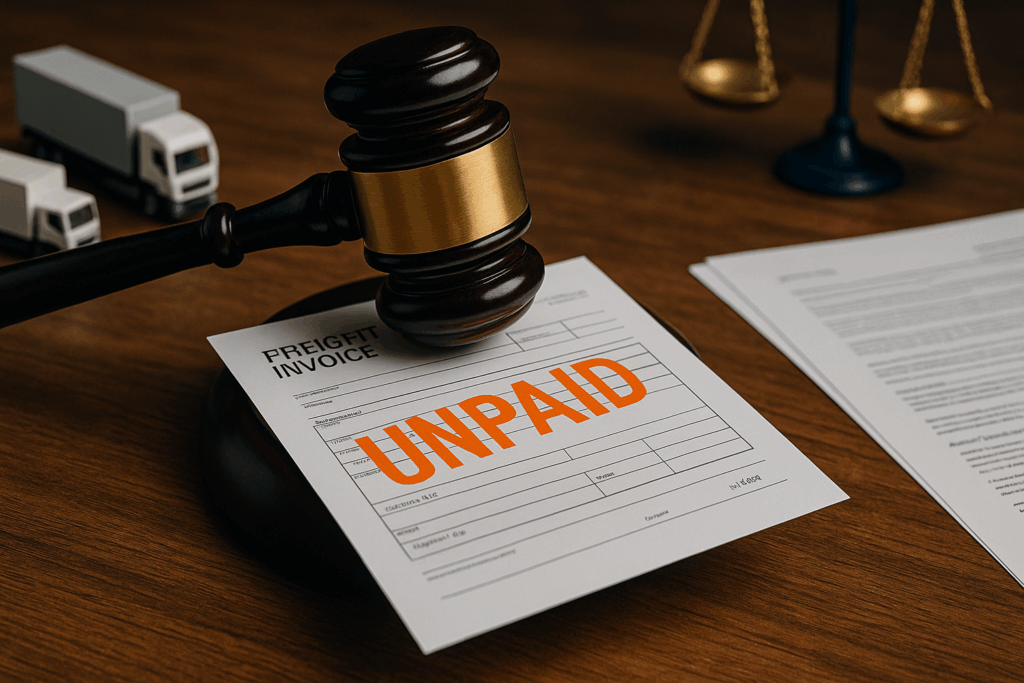
When a freight invoice goes unpaid, the issue isn’t always clear-cut. Sometimes, it’s not outright refusal to pay—but a dispute over charges, documentation, or service performance. In these cases, how you handle the situation can determine whether you recover the money—or lose it forever.
This guide walks you through the most effective strategies for freight payment dispute resolution, including how to de-escalate, when to escalate, and the legal tools available if negotiation fails.
Common Reasons Freight Payment Disputes Arise
Before launching into action, it’s important to identify the root cause of the dispute. Typical reasons include:
- Rate disagreements (accessorials, fuel surcharges, layovers)
- Missing or unsigned BOLs / PODs
- Damage claims or service issues
- Unauthorized charges
- Duplicate billing or system errors
- Breach of delivery instructions
Understanding the client’s perspective—without sacrificing your position—can open the door to faster resolution.
Step 1: Review Documentation and Identify Gaps
Start with a full audit of the shipment:
- Signed Rate Confirmation
- Bill of Lading (BOL)
- Proof of Delivery (POD)
- Invoice with itemized charges
- Email or text threads confirming pricing or service changes
If your paperwork is complete and consistent, you’ll have a strong foundation to resolve the freight billing dispute.
Tip: Missing PODs or unsigned BOLs are often the first line of attack from non-paying parties. Have them scanned, stored, and ready to present.
Step 2: Open a Diplomatic Line of Communication
Approach the other party professionally. Assume good faith—at least at first.
Email Template:
Hi [Client],
I understand there may be some concerns regarding Invoice #[XXXX] for the shipment on [Date]. I’ve attached the signed BOL, POD, and rate confirmation for your review. Let me know if we can clarify any discrepancies so we can close this out.
Appreciate your attention,
[Your Name]
Often, payment disputes are resolved in this early communication stage—especially if the documentation speaks for itself.
Step 3: Offer to Negotiate a Resolution (If Strategic)
If the dispute is legitimate—or if you value the relationship—you may consider a partial adjustment or goodwill discount.
Options may include:
- Waiving a disputed accessorial fee
- Splitting disputed charges
- Offering a payment plan on the condition of no future delays
Be careful: avoid setting a precedent for leniency that invites future payment avoidance. Clearly document any resolution and secure written agreement before proceeding.
Step 4: Escalate with a Formal Demand Letter
If attempts to resolve the dispute have stalled, a demand letter is the next step. This formal notice communicates:
- The amount owed
- Supporting documentation
- Previous attempts to resolve
- A firm deadline (typically 7–10 business days)
- Potential legal consequences if unpaid
A letter drafted or reviewed by a transportation collections attorney adds weight—especially when it references legal remedies like surety bond claims or litigation.
Step 5: Consider Legal Remedies if Payment Still Doesn’t Arrive
If the dispute remains unresolved and no payment is forthcoming, it’s time to assert your legal rights.
Option 1: File a Claim Against the Broker’s Surety Bond
If the dispute is with a freight broker, you can file a bond claim under FMCSA rules using the broker’s MC number. The bond company will review your documentation and may issue payment if your claim is valid.
Option 2: Initiate Small Claims Court Action
For amounts under your state’s small claims limit, you can sue for breach of contract. If your documentation is strong, you may win by default or with minimal dispute.
Option 3: Hire a Transportation Debt Collection Attorney
For larger balances or repeat offenders, legal counsel can help:
- File formal lawsuits
- Recover attorney’s fees (if in your agreement)
- Garnish accounts or liens after judgment
- Enforce rights under the Uniform Commercial Code (UCC)
Real-Life Example: Payment Secured After Formal Dispute Process
A dry van carrier in Georgia completed a $7,200 delivery. The broker disputed $1,200 for “unauthorized detention” despite the rate confirmation allowing for it. After informal negotiation failed, the carrier:
- Sent a demand letter through their attorney
- Filed a bond claim with the broker’s surety
- Provided signed documentation proving authorization
The surety company ruled in the carrier’s favor. Full payment was issued within 30 days, including the disputed amount.
Frequently Asked Questions
What should I include in a demand letter for a freight invoice dispute?
Always include:
- Shipment details
- Copies of BOL, POD, and invoice
- Clear deadline
- Legal next steps if unpaid
How long should I wait before taking legal action?
If a dispute hasn’t been resolved after 30–45 days—and the other party has stopped engaging—it’s time to consider formal enforcement.
Can I recover legal fees?
Only if your agreement includes a clause stating that attorney’s fees and collection costs are recoverable. Include this in all future rate confirmations.
Final Thoughts: Resolve Freight Disputes With Confidence
Freight payment disputes are part of doing business—but they don’t have to derail your cash flow or drain your time. With the right documentation, a professional approach, and clear legal strategy, you can turn most disputes into recoverable revenue.
 Stuck in a Freight Payment Dispute?
Freight Collection Solutions helps carriers, 3PLs, and freight forwarders recover unpaid invoices—even in tough dispute scenarios. From negotiation to litigation, we handle the legal work so you can focus on the road ahead.