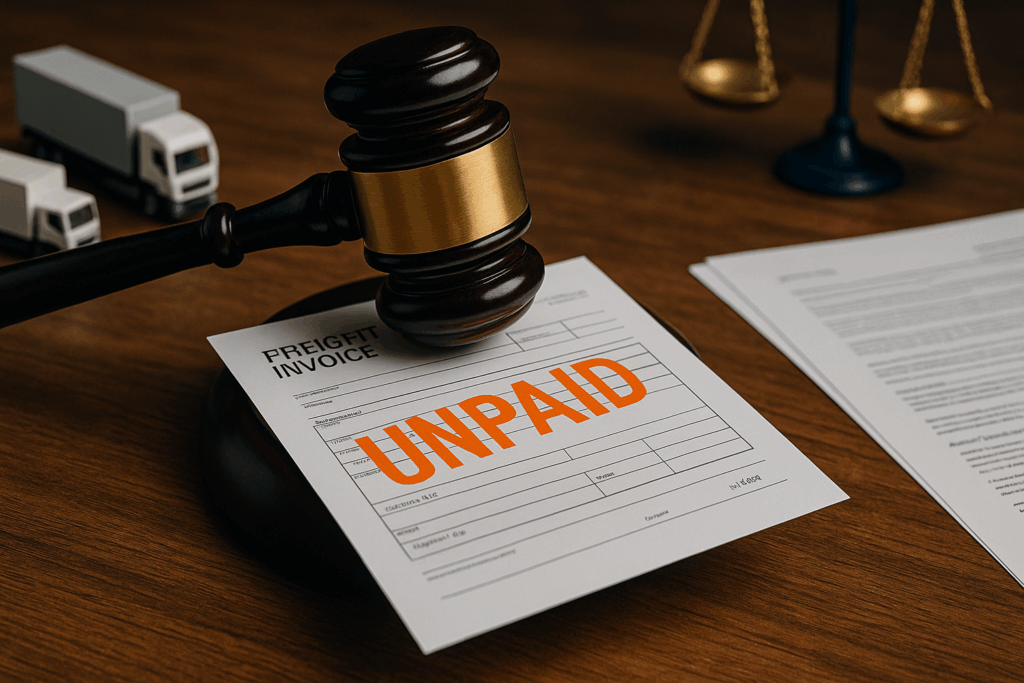
Filing a Freight Broker Bond Claim: A Step-by-Step Guide
Freight broker bond claims are one of the most effective legal tools available to carriers, owner-operators, and transportation companies trying to recover unpaid invoices. When a broker fails to pay for delivered freight, their federally mandated surety bond can offer a faster, less adversarial path to payment—if you know how to use it.
In this guide, we’ll break down the exact steps involved in filing a freight broker bond claim, what documents you need, and how to increase your chances of getting paid.
Understanding the Freight Broker Bond
A freight broker bond—also known as an FMCSA BMC-84 bond—is a $75,000 surety bond required by the Federal Motor Carrier Safety Administration (FMCSA). It exists to protect carriers against non-payment by licensed brokers.
If a freight broker fails to pay a carrier or other party for services rendered, the unpaid party can file a claim against this bond to recover owed funds. The bond is backed by a surety company that investigates and, if valid, pays out claims up to the bond limit.
Step-by-Step: How to File a Freight Broker Bond Claim
Step 1: Confirm the Broker’s Bond Details
Start by looking up the broker’s MC (Motor Carrier) number on the FMCSA SAFER system. This will show you:
- Whether the broker is active and licensed
- Their bond number
- The name and contact information for their surety company
 Tip: Print or screenshot the page as evidence.
Step 2: Organize Your Documentation
The more complete your file, the more credible your claim. You’ll need:
- Signed Rate Confirmation – proves agreed-upon terms and rates
- Bill of Lading (BOL) – shows the load was picked up
- Proof of Delivery (POD) – confirms delivery was completed
- Invoice – details the amount owed
- Email or message correspondence – helps support your position if there are disputes
- Demand letter – a formal request for payment sent to the broker
Ensure all documents are accurate, clearly dated, and signed where applicable.
Step 3: Send a Demand Letter to the Broker
Before filing the bond claim, send a formal payment demand to the broker. This demonstrates that you made a good-faith attempt to resolve the matter first.
The demand letter should include:
- Your business name and contact info
- Details of the unpaid invoice (amount, date, load info)
- Reference to supporting documents (e.g., BOL, POD)
- A deadline for payment (7–10 business days)
- Your intent to file a bond claim if not resolved
Mail this via certified mail or email with a read receipt.
Step 4: File the Claim with the Surety Company
If the broker fails to respond or refuses to pay, file your claim with the surety company.
Include:
- A cover letter explaining your claim
- All supporting documentation listed above
- Contact information for follow-up
Tip: Be concise and organized. Highlight key facts like MC number, load date, and total amount owed.
The surety will open an investigation. If they determine your claim is valid, they’ll pay you directly (up to the bond’s value). They’ll then seek reimbursement from the broker.
Step 5: Track the Claim Status and Follow Up
Surety investigations can take 30–90 days. Follow up regularly but professionally. Keep copies of all communications and note every call or email.
If your claim is denied, request a written explanation. You may have the option to:
- Submit additional evidence
- File an appeal
- Pursue legal action against the broker directly
How Long Do You Have to File a Freight Broker Bond Claim?
Most sureties require that claims be filed within 12–18 months of the delivery date. Always check the bond’s terms for specific deadlines.
Delaying your claim can result in forfeiture of rights, even if the broker is clearly at fault.
FAQs About Freight Broker Bond Claims
What if the broker went out of business?
You can still file a claim as long as the bond was active at the time of service. The surety company may pay even if the broker is now closed.
Can I file a bond claim and sue the broker?
Yes. Filing a bond claim does not limit your right to pursue litigation. However, most carriers try the bond route first because it’s faster and less costly.
What if multiple carriers file claims?
If total claims exceed $75,000, the bond payout is prorated among valid claimants. The sooner you file, the better.
Conclusion: Act Quickly and Document Everything
Freight broker bond claims are one of the strongest legal protections carriers have against non-payment. But the system only works if you act quickly, document everything thoroughly, and follow the process correctly.
At Freight Collection Solutions, we’ve helped countless carriers navigate broker bond claims and get paid—without court battles or collection headaches. Our team can prepare your file, draft your demand, and submit your claim to the surety on your behalf.
 Need Help Filing a Freight Broker Bond Claim?
Don’t leave money on the table. Let Freight Collection Solutions help you recover what you’re owed.