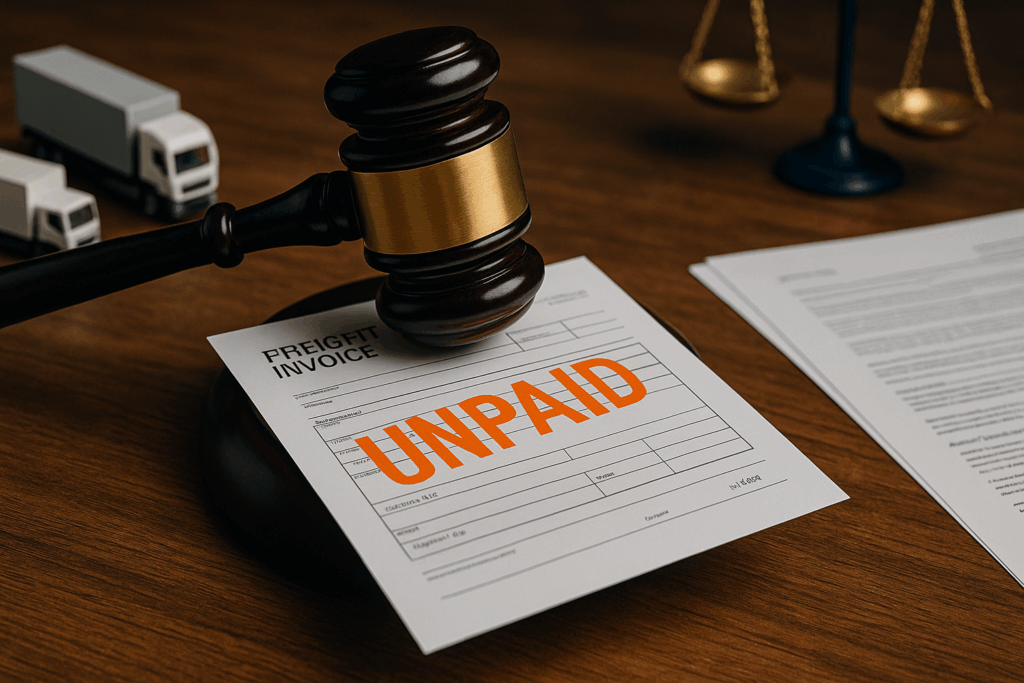
Before you sign any freight factoring agreement, it’s essential to know what you’re committing to. Carriers often enter factoring relationships for fast funding, only to find themselves trapped in costly, one-sided contracts. Misunderstood clauses lead to withheld payments, surprise chargebacks, or long-term lock-ins.
This guide breaks down the key clauses in a freight factoring agreement, how they affect your business, and what you need to review before signing—or when seeking to exit a bad deal.
What Is a Freight Factoring Agreement?
A freight factoring agreement is a contract between a trucking company and a factoring company. The carrier agrees to sell freight invoices to the factor at a discount in exchange for fast cash. In return, the factor assumes the responsibility of collecting payment from brokers or shippers.
While the concept sounds simple, the agreements can be highly complex and often written to protect the factoring company—unless you know what to look for.
Key Clauses That Can Make or Break the Deal
1. Recourse vs. Non-Recourse Terms
This is one of the most important clauses in any factoring contract.
- Recourse Factoring means if the customer doesn’t pay the invoice, you have to repay the factor.
- Non-Recourse Factoring means the factor assumes that risk—but only under specific conditions.
Watch out for:
Non-recourse contracts that still allow chargebacks for disputed invoices or missing documents, effectively making them partial-recourse agreements.
2. Chargeback and Reserve Clauses
Chargebacks occur when the factor reverses payment on an invoice due to non-payment, dispute, or documentation issues. These clauses explain:
- When chargebacks can happen
- How long invoices must stay unpaid before they’re charged back
- What portion of your payment is held in reserve and when it’s released
Tip: Look for clauses that give the factor too much discretion. These can be used to withhold large amounts of your earned revenue.
3. Termination and Contract Length
Many carriers are shocked to find they’ve signed 12- or 24-month agreements—with termination fees in the thousands.
- Some agreements auto-renew if not canceled in writing within a narrow window
- Early termination often includes fees equal to your expected monthly volume times the remainder of the contract
Tip: Always negotiate flexible termination terms and avoid automatic renewal clauses when possible.
Less Obvious Clauses with Major Impact
1. All-Accounts vs. Selective Factoring
An all-accounts clause requires you to factor every invoice you generate. That gives the factor control over your entire receivables process—and limits your financial flexibility.
Selective factoring lets you choose which loads or customers to factor. This is ideal for companies that want to retain control or have established shippers who pay on time.
2. Minimum Volume Requirements
Some contracts require you to factor a minimum dollar amount per month—or face penalty fees.
Example: If your agreement says you must factor $100,000 per month and you only factor $60,000, you could be billed the difference in fees.
This clause can cripple smaller fleets or those with fluctuating revenue.
3. Power of Attorney (POA)
Most factoring agreements require a limited POA so the factor can:
- Contact your customers
- Endorse checks
- File UCC liens
While POA is standard, broad or unlimited powers can give the factor control beyond what’s necessary—like interfering with customer relationships.
Real Example: The Hidden Lock-In Clause
A 5-truck carrier in Texas signed a 1-year freight factoring agreement without realizing it contained:
- A 30-day auto-renewal clause
- A $25,000 early termination fee
- Mandatory factoring of all invoices
When they tried to switch providers, the factor froze their reserve account, refused payment on new invoices, and enforced the contract. Legal review found these actions valid under the signed terms. A court-approved settlement cost the carrier nearly $15,000—just to leave.
This is why understanding your freight factoring agreement before you sign is critical.
What to Review with a Lawyer
Before signing (or challenging) a factoring contract, review these with an attorney:
- Advance rate and fee structure
- Reserve terms and release timelines
- Recourse conditions and exceptions
- Contract length and termination policy
- Chargeback definitions
- Customer contact permissions
- UCC lien rights and filing procedures
A freight attorney can help you negotiate changes to protect your business from unnecessary risk.
Tips for Negotiating a Fair Factoring Agreement
- Clarify recourse vs. non-recourse protections
- Request shorter contract lengths or trial periods
- Ask for fixed fees, not percentage-based surprises
- Retain the ability to factor selectively
- Limit chargeback reasons to clear, objective issues
The more control you retain, the better protected you are if something goes wrong.
When You’re Already in a Bad Agreement
If you’ve already signed and are experiencing problems:
Step 1: Review the Contract
Pinpoint where the factoring company is exercising rights—and whether they’re violating any terms.
Step 2: Document Issues
Keep records of:
- Delayed or withheld payments
- Invoice disputes
- Unexplained fees
- All communication
Step 3: Contact Legal Counsel
An experienced freight attorney can:
- Challenge unfair contract enforcement
- Negotiate an exit
- Recover wrongfully withheld funds
- File legal claims for breach of contract or bad faith conduct
Conclusion: Don’t Sign Away Control Without Understanding the Terms
A freight factoring agreement can help your business grow—but only if the contract is fair. Every clause has consequences, and what seems like a minor detail could cost you thousands later. Know your rights, seek legal review, and negotiate the terms before putting pen to paper.
 Need Help Reviewing or Fighting a Freight Factoring Agreement?
Freight Collection Solutions helps trucking companies review, renegotiate, and challenge unfair factoring contracts. We protect your business from hidden clauses, illegal practices, and unethical providers.