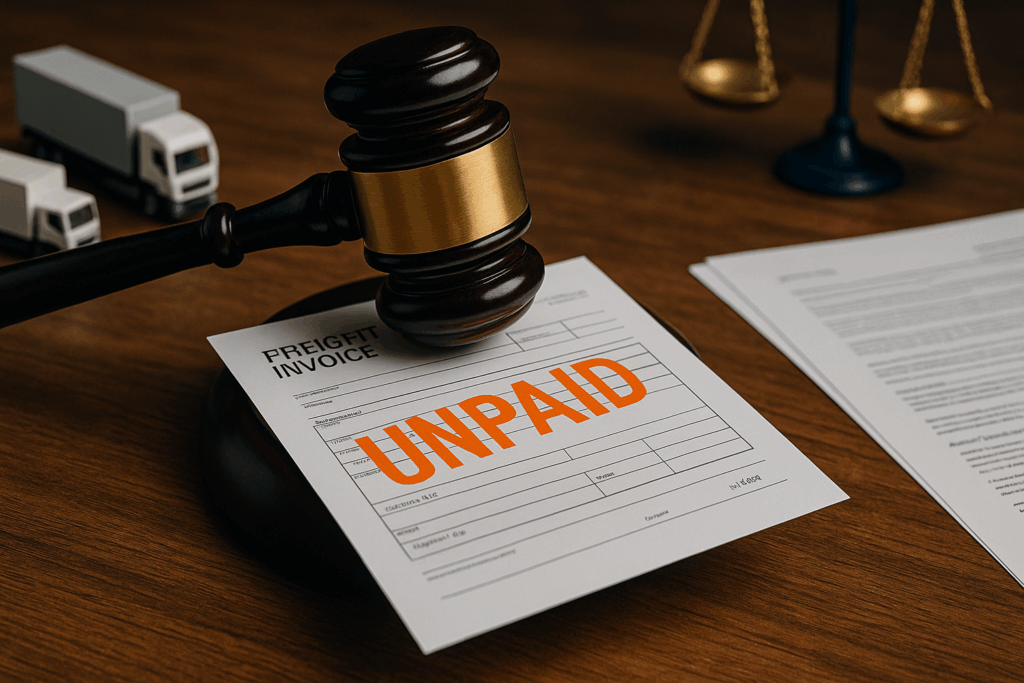
 Think You’re Hauling for a Legit Broker? Think Again.
One of the fastest-growing threats in the freight and logistics industry is double brokering—a practice that causes confusion, delays, and worst of all, unpaid freight bills.
You delivered the freight. You submitted your invoice. But now, no one’s paying. Why? You may have been caught in a double brokering scheme—and now you’re stuck in a complex web of liability.
This guide breaks down the legal risks of double brokering, how it causes unpaid freight invoice recovery nightmares, and what you can do if it happens to you.
 What Is Double Brokering?
Double brokering occurs when a licensed broker accepts a load from a shipper, then illegally re-brokers that load to another broker or carrier—without the shipper’s knowledge or approval.
Here’s how the chain might look:
- Shipper hires Broker A to move a load.
- Broker A illegally passes the load to Broker B.
- Broker B hires a Carrier to haul the freight.
- The Carrier delivers the freight but never gets paid—because Broker A didn’t authorize the transaction.
The result? The carrier has no contractual relationship with the original shipper—and may not even know who owes them money.
 Why Is Double Brokering a Legal Problem?
Double brokering violates FMCSA rules and often breaches both the shipper–broker and broker–carrier contracts. It creates:
- Lack of payment liability clarity
- Insurance issues
- Broken chains of communication
- Fraud risk
Worse, it often leads to carriers being unable to collect unpaid freight invoices because the legal party responsible for payment isn’t the one they contracted with—or no longer exists.
 How Double Brokering Leads to Unpaid Freight Invoice Recovery
If you’re a carrier who delivered freight through a broker who turned out to be a middleman, here’s what can happen:
- You invoice the broker who hired you (Broker B).
- Broker B never pays—or disappears.
- You contact the shipper or Broker A, who refuses to pay because they never authorized the transaction with you.
- You’re left with no payment, no contract with the shipper, and limited recourse.
Now you’re stuck in unpaid freight invoice recovery mode—and legal action may be your only path forward.
 Common Signs You’ve Been Caught in a Double Brokering Scam
Double brokering can be hard to detect at first. Watch for these red flags:
- Broker email addresses don’t match official company domains.
- Payment terms are vague or verbal only.
- You’re asked to send paperwork to a Gmail or Yahoo address.
- The rate seems unusually high for the lane.
- There’s no signed rate confirmation—or it comes from a name you don’t recognize.
- After delivery, the broker becomes unresponsive or unreachable.
If you suspect double brokering, take immediate steps to secure payment and preserve your documentation.
 Legal Options When You’re a Victim of Double Brokering
You still have rights—even if the original contract is murky. Here’s how to start unpaid freight invoice recovery when double brokering is involved.
1. Gather All Documentation
Before taking action, collect and organize:
- Rate confirmations
- Bills of Lading (BOLs)
- Proof of Delivery (POD)
- Emails or texts with all brokers involved
- Any MC numbers and DOT info you received
This trail is crucial in identifying the liable party and demonstrating the legitimacy of your services.
2. File a Claim Against the Broker’s Bond
If either broker (A or B) is registered with the FMCSA, they are required to have a $75,000 surety bond. You can file a claim against this bond with supporting documents.
While it may be time-consuming, bond claims are a powerful tool in freight bill collection services, especially when brokers become unresponsive.
3. Send a Demand Letter to Both Brokers
A legal demand letter should go to all potentially liable parties—especially if there’s ambiguity about who authorized the shipment.
The letter should:
- Detail the shipment, rate, and delivery date
- Identify who hired you and who accepted delivery
- Reference all attached documentation
- Demand payment within a set timeframe (e.g., 10 days)
This shows you’re serious about unpaid freight invoice recovery and prepared to escalate if necessary.
4. Consider Legal Action Against the Shipper (in Certain Cases)
In some cases, a carrier may have grounds to sue the shipper under doctrines like:
- Unjust enrichment (they accepted the delivery without paying you)
- Implied contract (based on benefit received)
However, these cases are complex and vary by jurisdiction. Consulting a freight collection attorney is essential.
5. Report the Broker to the FMCSA
If a broker engaged in double brokering, you can and should report them to the FMCSA via their complaint form. Repeated violations can lead to license revocation.
This may not help you get paid immediately—but it protects other carriers from falling victim to the same scam.
 How to Prevent Double Brokering in the Future
Prevention is your best line of defense. Follow these best practices to protect yourself:
- Always verify broker MC numbers and check reviews on Carrier411, DAT, or TruckStop.
- Avoid brokers who refuse to sign rate confirmations.
- Check that the company name on the rate confirmation matches the MC number on file.
- Never agree to haul loads without knowing who the shipper is.
- Avoid deals where pickup and delivery are “already done” but payment is still pending.
- Trust your instincts—if something feels off, it probably is.
Taking these steps reduces your chances of ending up in an unpaid freight invoice recovery scenario due to fraud.
 Freight Collection Services Can Help With Double Brokering Disputes
Many freight collection agencies and law firms now specialize in helping carriers collect unpaid freight invoices in double brokering cases. Their services often include:
- Investigating all entities involved
- Filing bond claims
- Sending legal demand letters
- Negotiating settlements
- Litigating in court if needed
The complexity of these cases makes professional help a smart investment—especially when large sums are at stake.
 FAQs About Double Brokering and Freight Invoice Recovery
Is double brokering illegal?
Yes, in most cases. Unless both the shipper and carrier have consented and the broker has legal authority to re-broker, it’s considered fraudulent under FMCSA rules.
Can I be sued for holding freight due to non-payment?
Yes, if you assert a carrier’s lien improperly or without contractual support. You should only use this strategy under legal guidance to avoid liability.
What happens if the broker involved goes out of business?
If the broker’s surety bond is still active, you can file a claim. If not, legal options become more limited, but you may still sue other responsible parties, including the shipper or original broker.
 Don’t Let Double Brokering Leave You Empty-Handed
Getting caught in a double brokering situation is frustrating—and costly. But you don’t have to absorb the loss. With the right documentation and legal support, you can pursue unpaid freight invoice recovery and hold the right party accountable.
At Freight Collection Solutions, we help carriers untangle complex broker disputes, submit bond claims, and take legal action when needed.