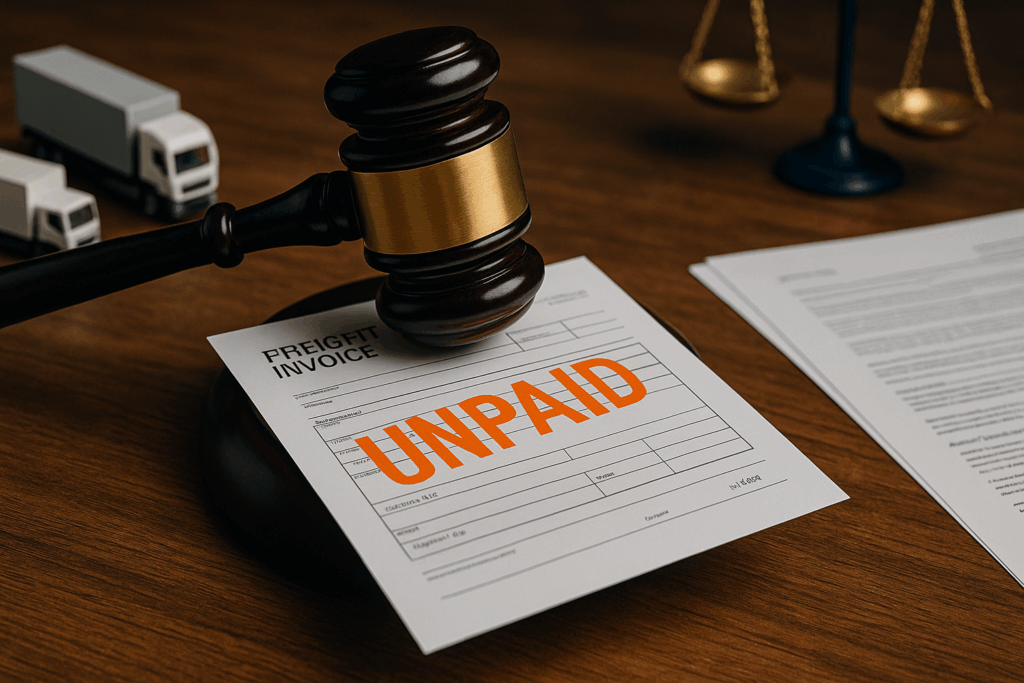
Legal Strategies to Recover Unpaid Freight Charges from Shippers
When a shipper fails to pay for freight services, the financial hit can be devastating—especially for independent carriers and small fleets. You delivered the load. The shipper received the goods. But the payment never arrived.
If you’re in this position, there are several legal strategies to help you recover unpaid freight charges from shippers. Whether the non-payment was due to negligence, dispute, or outright fraud, the law provides multiple tools to pursue what you’re owed—and get your business back on track.
Why Shippers Might Withhold Payment
Shippers refuse payment for many reasons. Sometimes it’s an honest dispute—other times, it’s a delay tactic or a refusal to honor the agreed terms. Common scenarios include:
- Disputes over damaged goods (even if unrelated to carrier negligence)
- Shipper claims the load was late
- Invoice discrepancies
- Cash flow problems on the shipper’s side
- Deliberate breach of contract
Whatever the reason, unpaid freight charges are a breach of the agreed arrangement. And if the shipper directly contracted with you—without a broker as intermediary—they’re fully liable for payment under contract law.
Legal Basis for Recovering Freight Charges from Shippers
When a shipper fails to pay, your best legal option is typically a breach of contract claim. Even if the contract was informal or verbal, performance by the carrier (e.g., delivery of the shipment) may still create an enforceable obligation.
Other legal theories that may support your claim include:
- Unjust enrichment – the shipper benefited from your services without paying
- Account stated – if the shipper accepted invoices without objection
- Promissory estoppel – if the shipper promised payment and you relied on it
If your paperwork is strong, these legal strategies can support a freight non-payment lawsuit and improve your chances of recovering damages.
Step-by-Step Legal Strategy for Freight Collections
1. Review the Shipper Agreement or Rate Confirmation
Start by reviewing:
- Your written contract (if any)
- The rate confirmation or email agreement
- Any terms and conditions of service
Look for:
- Payment terms
- Penalty clauses
- Jurisdiction/venue selection
- Whether the shipper waived offset rights
If your agreement contains a clause stating payment is due upon delivery (or within X days), you already have a strong legal footing.
2. Send a Final Demand Letter
Before going to court, send a formal demand letter outlining:
- The services provided
- The amount owed
- The deadline for payment (typically 7–14 days)
- A warning that legal action will follow if payment isn’t made
This letter should come from your attorney, if possible, to increase its effectiveness.
3. File a Freight Non-Payment Lawsuit
If the shipper fails to respond or refuses to pay, it’s time to file a lawsuit. You can do this in:
- Small claims court – ideal for claims under $10,000–$20,000 depending on the state
- State court – for moderate to large claims
- Federal court – for interstate shipments involving parties in different states
A lawsuit can seek not only the unpaid freight charges but also:
- Interest and late fees
- Attorney’s fees (if allowed by contract)
- Court costs
What to Include in Your Legal Filing
To increase your chances of success, be ready to present:
- A signed contract or rate confirmation
- Invoices and account statements
- Bill of lading showing delivery
- Proof of delivery (POD)
- Written communication with the shipper
These documents will establish that:
- A contract existed
- You performed your part (delivered the freight)
- The shipper accepted the goods and failed to pay
Alternative Dispute Resolution (ADR)
Some contracts include arbitration or mediation clauses, which require both parties to try resolving disputes outside of court.
While ADR can be faster and cheaper than litigation, it can also limit your legal leverage. If the shipper delays or refuses to cooperate, you may still need to sue.
A freight collections attorney can help you understand if ADR is required—or whether litigation is your best path forward.
Can You Place a Lien on the Freight?
In some states, carriers may have a possessory lien on the freight they transport, meaning they can legally hold the cargo until payment is received.
However, once you’ve delivered the freight, your lien rights are limited. At that point, your only recourse is typically legal action.
In rare cases, you may also pursue a mechanic’s lien or commercial lien on the shipper’s property—though this requires additional legal steps and varies by jurisdiction.
Real-World Scenario: Shipper Default Case
Let’s say a flatbed carrier delivers steel coils from Texas to Alabama for a mid-sized manufacturer. The rate confirmation was signed by the shipper, but after delivery, the shipper disputes the invoice due to an alleged delay.
Despite multiple calls and emails, the shipper refuses to pay. The carrier sends a demand letter and then sues in state court.
Because the POD shows timely delivery—and there’s no clause in the contract allowing the shipper to withhold payment over timing—the court finds in favor of the carrier. The judgment includes interest and legal fees.
This scenario is increasingly common, especially with spot market loads where trust and documentation are critical.
Frequently Asked Questions
What if the contract was verbal?
Verbal contracts are enforceable in many states, especially if supported by performance and documentation (e.g., invoice, delivery records). A lawyer can help assess your case.
Can I charge interest or late fees?
Only if your rate confirmation or contract explicitly allows it. Otherwise, you may still be entitled to prejudgment interest as allowed by law.
Can I sue both the broker and the shipper?
If you were hired by the broker, they are your contractual party. But if you contracted directly with the shipper, they’re liable. In some cases, both may share responsibility depending on documentation and payment flow.
Tips to Prevent Non-Payment by Shippers
The best legal strategy is prevention. Here’s how to reduce risk:
1. Use Detailed Rate Confirmations
Include payment terms, deadlines, penalties for late payment, and jurisdiction clauses.
2. Avoid Loads from Unknown Shippers Without Credit Checks
Verify business information. Use load boards that track payment history or consider requiring partial prepayment.
3. Get Signed PODs
A signed proof of delivery is your strongest defense in a dispute.
4. Maintain a Consistent Invoicing Process
Send invoices promptly and follow up regularly. Waiting 60–90 days to follow up can harm your claim.
5. Partner With a Legal Team
An attorney focused on commercial litigation for trucking can help you set up bulletproof documentation—and take immediate action if a shipper defaults.
Conclusion: You Delivered. They Should Pay.
Unpaid freight charges from shippers are not just a nuisance—they’re a threat to your business. But with the right documentation, legal strategy, and support, you can take control and recover what you’re owed.
At Freight Collection Solutions, we represent carriers in every stage of freight non-payment disputes—from demand letters to litigation. If a shipper owes you money, we’ll help you fight back—efficiently, professionally, and legally.
Contact Us Today for Immediate Assistance
If you’re facing unpaid freight invoices and need help getting paid, Freight Collection Solutions Law Group is here for you. Let us handle the legal details while you focus on your business.
For immediate assistance, contact us at 713-940-1886 or fill out the form.