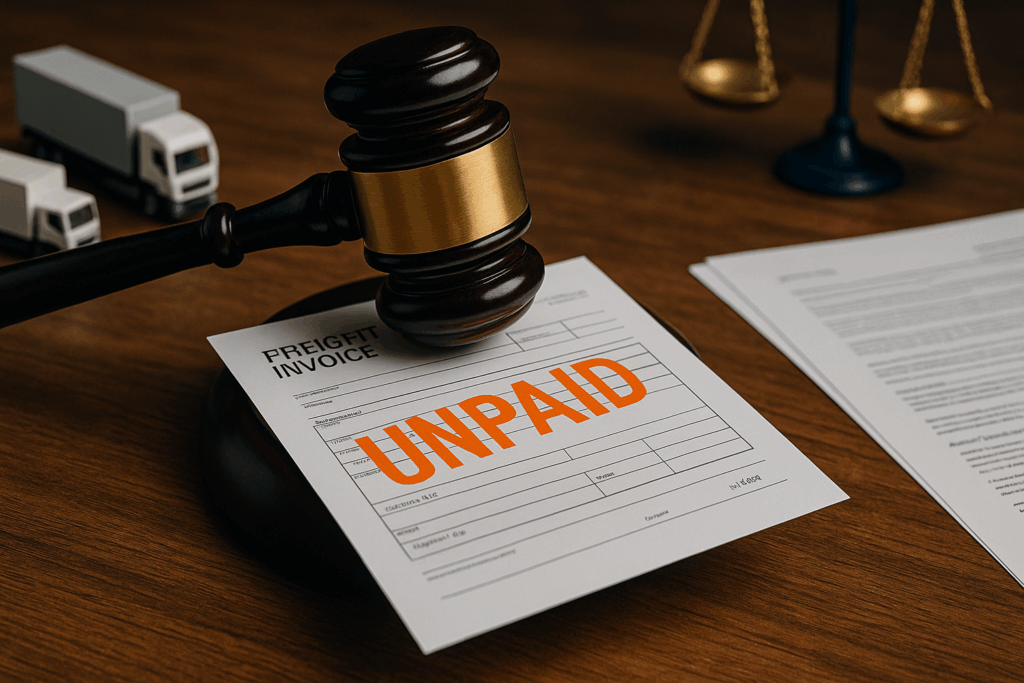
When a freight broker or shipper goes bankrupt, the ripple effect hits carriers first—and hardest. Loads are delivered. Invoices are unpaid. And suddenly, you’re scrambling to collect money you’ve already earned.
In a perfect world, every load would be backed by a secure contract and prompt payment. But in reality, broker and shipper insolvency is becoming an all-too-common headache for carriers.
Whether you’re an independent owner-operator or managing a fleet, understanding the effects of insolvency—and how to protect yourself—can make the difference between surviving a financial hit and suffering a major loss. In this article, we’ll break down the real-world impact on freight carriers and what you can do about it.
What Is Insolvency—and Why Should Carriers Care?
Insolvency means that a business (in this case, a broker or shipper) can no longer meet its financial obligations. This could result in:
- Missed payments
- Suspended operations
- Bankruptcy filings (Chapter 7 or 11)
The freight industry is particularly vulnerable to insolvency because of:
- Razor-thin margins
- Delayed billing cycles
- Broker dependence on shipper payments
- External market shocks (fuel prices, interest rates, consumer demand)
When a broker or shipper becomes insolvent, it’s the carriers—who’ve already provided services—who are most at risk of getting left unpaid.
Freight Carrier Challenges After Insolvency
1. Unpaid Invoices
The most immediate and obvious impact is financial. You’ve delivered the freight, but the payment never comes. Often, it’s not just one load—it’s several.
This can lead to:
- Cash flow shortages
- Missed payroll
- Delayed truck maintenance
- Late fuel card payments
- Personal financial strain (for owner-operators)
Even a single unpaid invoice of $5,000–$10,000 can tip a small operation into the red.
2. Legal and Administrative Burden
Recovering funds from an insolvent broker or shipper isn’t simple. You’ll need to:
- Track down bond information
- File claims with surety companies
- Monitor bankruptcy dockets
- Hire a collections attorney if things escalate
All of this takes time, resources, and legal know-how that most carriers don’t have in-house.
3. Operational Delays
If a broker cancels or disappears mid-load—or a shipper pulls out of an agreement—you could be stuck:
- With freight you can’t deliver
- Without reimbursement for fuel or tolls
- Searching for backhauls or last-minute loads
These disruptions waste time and cut directly into your margins.
Emotional and Reputational Toll
Insolvency doesn’t just affect your bank account—it can shake your confidence and reputation.
You may:
- Lose trust in the brokerage community
- Be forced to explain late payments to drivers or vendors
- Feel pressure from factoring companies
- Face credit score impacts if defaults affect your ability to meet financial obligations
It’s not just about one unpaid load—it’s the spiral that comes with it.
Signs of Pending Insolvency to Watch For
Stay alert for red flags that a broker or shipper may be headed toward insolvency:
 Sudden communication drop-off
Excuses for delayed payments
Frequent staff turnover
MC number placed “Out of Service”
Industry chatter or online complaints
Shipper asking for extended payment terms without justification
If any of these signs appear, pause future loads and begin preparing your documentation in case recovery is needed.
How to Respond After a Broker or Shipper Becomes Insolvent
1. File a Bond Claim (for Brokers)
All federally licensed brokers must carry a $75,000 freight broker bond. File a BMC-84 bond claim with the surety company as soon as possible. First-come, first-paid is often the rule.
2. File a Proof of Claim (for Bankrupt Shippers)
If a shipper files Chapter 11 or Chapter 7 bankruptcy, you must file a proof of claim with the court. Deliveries made within 20 days of the filing may qualify as priority claims.
3. Hire a Collections Attorney
An experienced freight collections lawyer can help you navigate complex legal steps, file court documents, and investigate potential third-party liability or asset transfers.
4. Document Everything
Keep copies of:
- Rate confirmations
- Bills of lading
- Proof of delivery
- Communications
- Invoices
These will be essential for bond claims, bankruptcy filings, and court proceedings.
Long-Term Effects on Freight Carriers
Even if you recover some of the money, insolvency can leave lasting scars.
- Reduced cash reserves from delayed payouts
- Increased factoring costs to cover gaps
- More conservative load acceptance policies
- Strained vendor relationships from your own payment delays
Worst case? You may downsize operations—or shut down completely.
That’s why it’s so important to take preventative measures before an insolvency hits.
Preventing Future Losses
Here are steps to protect your business from insolvency exposure:
 Run credit checks on brokers and shippers
Use strong carrier agreements with clear payment terms
Invoice immediately and follow up on day 15, 30, and 45
Use factoring partners that offer non-recourse options
Diversify your customer base to avoid relying too heavily on one broker or shipper
Set internal triggers for when to escalate unpaid invoices (e.g., at 30 days past due)
Insolvency can’t always be predicted—but it can be prepared for.
FAQs About Broker and Shipper Insolvency
Can I get paid if the broker or shipper filed bankruptcy?
Yes—if you act quickly. Priority freight claims (under §503(b)(9)) and bond claims may offer partial or full recovery. Legal guidance is recommended.
Is it worth hiring a collections attorney?
Absolutely. A good freight attorney can help you recover more, faster—especially when time-sensitive filings or legal arguments are involved.
How long does the recovery process take?
Bond claims can take 30–90 days. Bankruptcy proceedings may last 6–24 months. The sooner you act, the better your chances.
Insolvency Hurts—But You’re Not Alone
When a broker or shipper goes insolvent, it can feel like you’re stuck with the loss. But legal tools exist to help you recover. Whether it’s a bond claim, a court filing, or a collections action, you don’t have to figure it out alone.
At Freight Collection Solutions, we help carriers navigate the legal and financial fallout of broker and shipper insolvency. We’ve helped recover millions for carriers who thought their invoices were lost forever.